You want to wish a coworker happy job anniversary. You start typing. Then you stop. Is it “workiversary” or “workaversary”? Many people pause right here.
This word is new. It is not very old. It mixes two words: “work” and “anniversary.” Since it is new, people are not always sure how to spell it. Some write it with an “i.” Some write it with an “a.” Both look like they could be right.
People search this word before they post on LinkedIn, send a card, write an email, or post on social media. They want to look professional. They do not want to make a small spelling mistake in front of coworkers or a boss.
This article gives you a fast answer first. Then it shows where the word came from, how to spell it, common mistakes, and real examples. After this, you will never feel stuck on this word again.
Workiversary or Workaversary – Quick Answer
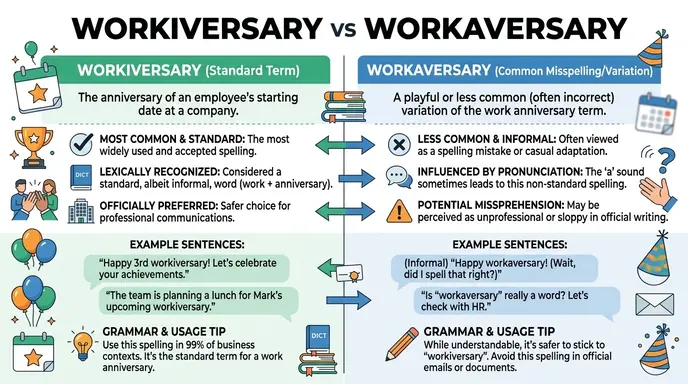
Here is the short answer: Use “workiversary.”
This is the spelling most people use. It is the spelling most companies use. It is also the spelling search engines and social media show most often.
Example: “Happy workiversary, Sarah! Three years and counting.”
“Workaversary” is not wrong in a strict sense, since this is an informal word with no fixed dictionary rule. But almost everyone uses “workiversary.” So that is the safe and smart choice.
The Origin of Workiversary or Workaversary
This word grew inside offices, not from old grammar books. People needed a short, fun way to say “the anniversary of starting a job.” Saying “the anniversary of my start date” takes too long. So people mixed two words together.
The word “anniversary” already has an “i” sound in its middle part. When people built the new word, most kept that same “i” sound. This gave us “workiversary.”
A smaller group of people heard the word out loud and copied the sound with an “a” instead. This gave us “workaversary.” But this spelling never became as popular.
There is another reason “workiversary” won. The word “workaversary” sounds close to words like “averse” and “adversary.” Both of those words have a negative feeling. That is the opposite of what people want when they celebrate good news at work.
British English vs American English Spelling
This is not really a British versus American spelling issue, like “color” and “colour.” Both regions did not build this word through old grammar rules. It is a modern internet word.
Most data shows the same pattern almost everywhere. People in the US, UK, Canada, and Australia all prefer “workiversary” over “workaversary.” A few small or local blogs use “workaversary,” but this is rare, not a regional rule.
| Form | US Usage | UK / Commonwealth Usage | Global Usage |
| Workiversary | ✅ Most common | ✅ Most common | ✅ Most common |
| Workaversary | ❌ Rare | ❌ Rare | ❌ Rare |
So you do not need to change your spelling based on your country. The same word works everywhere.
Which Spelling Should You Use?
Use “workiversary” almost every time. Here is a simple guide:
- Writing for US coworkers or clients: Use “workiversary.” It is the top choice in American offices.
- Writing for UK or Commonwealth readers: Use “workiversary.” It is also the top choice there.
- Writing for a global team: Use “workiversary.” It avoids confusion since it is the more recognized spelling worldwide.
- Writing inside a strict, formal document: Skip both words. Use “work anniversary” instead, since “workiversary” is still an informal, casual word.
The short rule: if you want a fun, casual word, pick “workiversary.” If you need a formal tone, use “work anniversary.”
Common Mistakes with Workiversary or Workaversary
Here are mistakes people often make:
- Writing “workaversary” by habit. Less common: Happy workaversary! More common and safer: Happy workiversary!
- Using the word in very formal writing. Too casual for a formal report: Her workiversary report is due Monday. Better: Her work anniversary report is due Monday.
- Spelling it as one wrong blend, like “workversary.” Wrong: workversary Right: workiversary
- Capitalizing it like a proper noun. Wrong: Happy Workiversary, Tom! (unless it starts a sentence or is a title) Right: Happy workiversary, Tom!
- Assuming there is one official, locked spelling. This word is not yet in most major dictionaries. So treat it as informal, and stay consistent once you pick a spelling.
Workiversary or Workaversary in Everyday Examples
In a work email: “Just a quick note to say happy workiversary! Thanks for everything you do.”
In a LinkedIn post: “Celebrating 5 years at this amazing company. Happy workiversary to me! “
In a team chat message: “Don’t forget, today is Mia’s workiversary!”
HR announcement: “This month, we celebrate three workiversaries across the design team.”
In a formal report (using the safer formal phrase): “The report tracks employee work anniversaries across all departments.”
These examples show that “workiversary” fits casual and semi-casual writing. Save “work anniversary” for strict formal writing.
Workiversary or Workaversary – Google Trends & Usage Data
Search data shows a clear pattern. People search “workiversary” far more often than “workaversary” on Google, Instagram, and other social platforms. Some reports show the gap is small, around two to three times more searches. Other reports show a much bigger gap on platforms like X, where “workiversary” appears far more often.
People search for this word most in January and September. These months often match new hires starting jobs, which leads to more anniversary dates later in the year. Searches also rise around yearly performance review periods, when people think about how long they have worked somewhere.
Most searches come from people checking spelling before they post something. This is why a fast, clear answer matters more than a long grammar lesson.
Comparison Table: Keyword Variations
| Variation | Common? | Use Case |
| Workiversary | ✅ Yes, most common | Casual or semi-casual writing |
| Workaversary | ⚠️ Rare, but used | Casual writing, less preferred |
| Workversary | ❌ No | Incorrect, missing letter |
| Work anniversary | ✅ Yes | Formal writing |
FAQs:
1. Is it “workiversary” or “workaversary”? “Workiversary” is the more common and more accepted spelling.
2. Is “workaversary” wrong? It is not a strict grammar mistake, since the word is informal. But far fewer people use it.
3. What does “workiversary” mean? It means the yearly date that marks when someone started a job.
4. Is “workiversary” a real dictionary word? Not yet in most major dictionaries. It is still treated as informal workplace language.
5. Should I use “workiversary” in a formal document? No. Use “work anniversary” instead for formal or official writing.
6. Do British and American English spell this word differently? No major difference. Both regions mostly use “workiversary.”
7. Why do two spellings exist for this word? Because it is a new, informal blend word, and people built it by ear instead of by a fixed spelling rule.
Conclusion:
The simple answer is this: use “workiversary,” not “workaversary.” It is the spelling most people search for, post with, and recognize right away. “Workaversary” is not a hard grammar mistake, but it is far less common and can look unfamiliar to readers.
This word stays mostly the same across American, British, and global English. There is no real regional rule to remember here, unlike older grammar patterns. The bigger choice is tone: use “workiversary” for fun, casual messages, and use “work anniversary” for formal writing like reports or HR documents.
Avoid mixing both spellings in the same message or document. Pick one and stay consistent. Once you remember that “workiversary” is the safe, popular choice, you will never feel stuck on this word again, whether you are writing a LinkedIn post, a card, or a quick team message.

I explore and explain the difference between commonly confused English words to make writing clearer and more accurate. I provide simple, SEO-friendly explanations with examples to help you understand usage easily. I help improve grammar skills by making word differences easy to learn and remember.







