You catch a glimpse of a small bump in the mirror. Your first thought is probably, “great, a pimple.” But then a few weeks pass, and it’s still there, not really changing. Now you’re wondering if it’s something else entirely, like a wart.
This happens to a lot of people. Both show up as small bumps on the skin. Both can appear pretty much anywhere. But under the surface, they come from two completely different causes, and once you know that, telling them apart gets a lot easier.
Quick note before we go further: this article is meant to help you understand the difference in general terms. It’s not a diagnosis. If you’re ever unsure about a bump on your skin, a doctor or dermatologist can take a proper look and tell you exactly what it is.
Start With the Cause, Not the Look
Here’s the fastest way to understand the difference. Don’t start with what it looks like. Start with why it’s there.
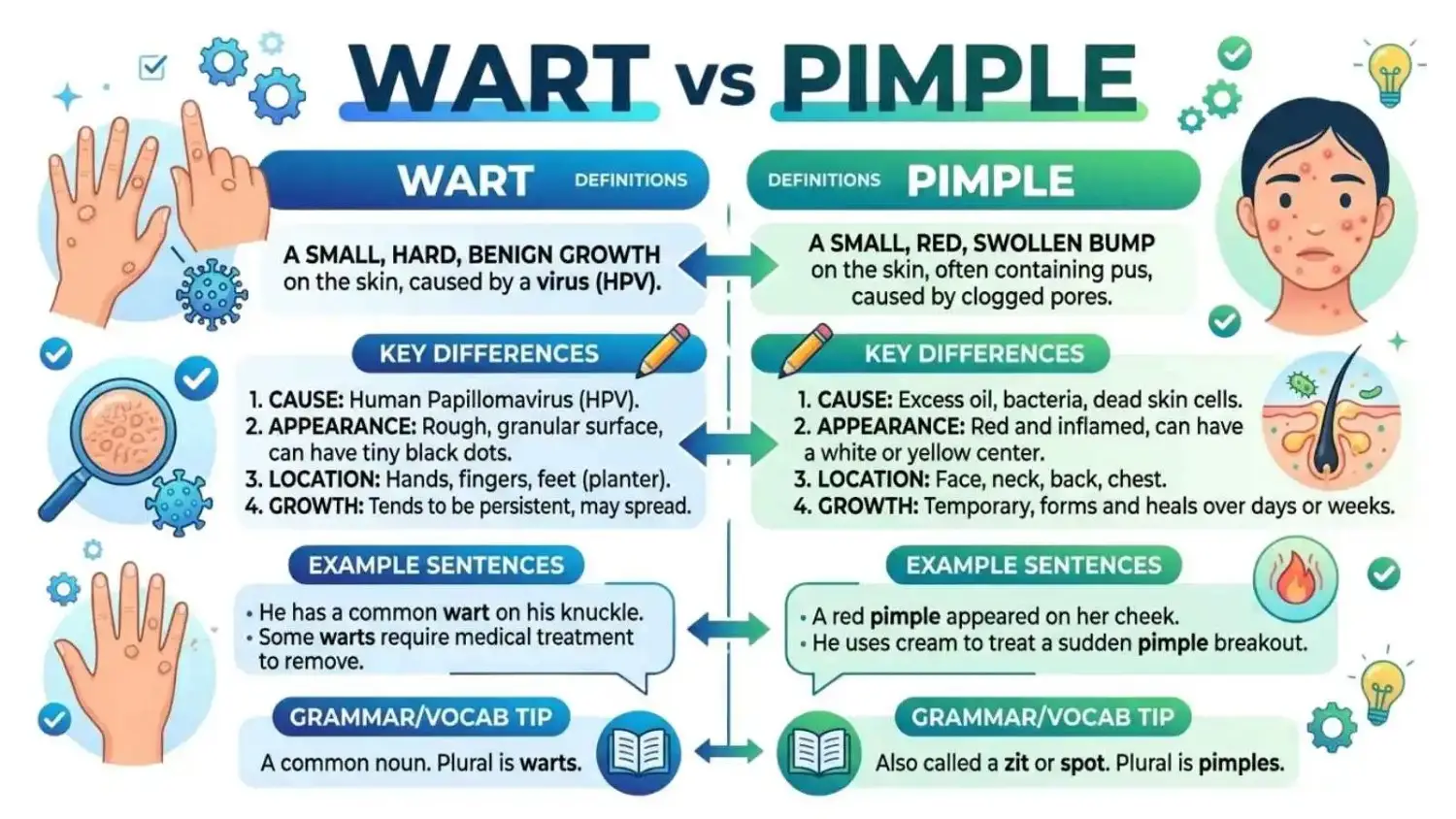
A pimple forms when a pore gets clogged with oil, dead skin, or bacteria. Nothing contagious about it, it’s just your skin doing its normal (if annoying) thing.
A wart forms because of a virus, specifically HPV, that gets into a small cut or scrape in your skin. That virus makes skin cells grow oddly fast, creating a small, rough bump. And since it’s viral, it actually can spread.
One is your skin’s oil glands acting up. The other is a virus setting up shop. That’s the core difference, and it explains almost everything else.
What Each One Actually Looks Like
Pimples tend to be soft, sometimes shiny, often with a little white or yellow tip in the middle. They’re usually red or pink around the edges.
Warts feel rougher, sometimes almost like a tiny cauliflower. They’re often skin-colored, gray, or slightly brown, and they don’t usually have that white “pop-able” center a pimple has.
How Long Each One Sticks Around
This is honestly one of the easiest ways to tell them apart.
A pimple usually shows up fast and disappears within a few days to about two weeks, especially with basic skin care.
A wart is a much slower mover. It can hang around for weeks, months, or even longer if it’s left alone. If a bump has been sitting there for over a month without changing much, that’s a decent hint it might be a wart.
Where They Tend to Show Up
Pimples love oily areas: your face, chest, back, and shoulders. This is why breakouts often cluster in the same spots.
Warts are more common on hands, fingers, feet, and knees, places that get small cuts, scrapes, or friction, which gives the virus an easy way in.
A Simple Side-by-Side
| Pimple | Wart | |
| Cause | Clogged pore, oil, bacteria | HPV virus |
| Feel | Soft, sometimes has a tip | Rough, bumpy |
| Common spots | Face, back, chest | Hands, feet, knees |
| Timeline | Days to two weeks | Weeks to months |
| Spreads to others? | No | Yes |
| Usually painful? | Can be tender | Usually not, unless on the sole of the foot |
Things People Often Get Wrong
“If it’s rough, it’s definitely a wart.” Not always. Dry skin, calluses, and other skin issues can feel rough too. A wart is just one possibility.
“I can just pop it like a pimple.” Please don’t, especially with a wart. Picking at a wart can actually spread the virus to other parts of your skin.
“Only kids get warts.” Not true. Warts show up at any age. They’re more common in kids and teens, but adults get them too.
“A pimple that won’t go away is just a stubborn pimple.” Maybe, but if it’s been there far longer than a normal pimple would last, it’s worth getting it checked, just in case it’s something else.
When It’s Worth Seeing a Doctor
For pimples, check in with a doctor if they’re painful, keep coming back a lot, or seem to be leaving scars.
For warts, a doctor can help if it’s spreading, hurting when you walk (common with foot warts), or just bothering you enough that you want it removed. Warts don’t need to be “fixed” urgently, but plenty of people choose treatment anyway.
Again, if you’re genuinely not sure what you’re looking at, that’s exactly what a doctor visit is for.
How People Actually Talk About This
Texting a friend: “Is this a pimple or a wart? It’s been here for like three weeks.”
On a skincare forum: “This breakout on my chin isn’t going away like a normal pimple would.”
At the doctor’s office: “Patient has a rough bump on the finger, likely a common wart.”
On social media: “Reminder: don’t pick at random bumps, might be more than just a pimple.”
What People Search For
Most searches around “pimple” are about fast fixes: how to clear one up, what causes breakouts, that kind of thing. Searches around “wart” tend to be more puzzled: why won’t this thing go away, what even is this, how do I get rid of it.
Both terms get searched a lot, pretty steadily, across the US, UK, and beyond, since skin questions come up for basically everyone at some point.
A Few Quick Answers:
Can a pimple eventually become a wart? No. They come from totally different causes, so one can’t turn into the other.
Are pimples contagious? Nope. They’re caused by your own skin’s oil and clogged pores, not a virus.
Are warts contagious? Yes, through skin-to-skin contact or shared items like towels.
Should I pop either one? Better not to. Popping a pimple risks scarring. Picking at a wart risks spreading the virus.
How long can a wart really last? Anywhere from a few weeks to several months, sometimes longer without treatment.
Can adults get warts? Definitely. They’re more common in kids, but adults get them too.
The Bottom Line:
Pimples and warts might both start as a small, annoying bump, but they’re not the same thing at all. Pimples come from clogged pores and oil. Warts come from a virus. That one fact explains why they look different, last different amounts of time, and behave differently.
Fast-appearing, red, with a white tip? Probably a pimple. Rough, slow-growing, sticking around for weeks? Probably a wart. Either way, hands off, don’t pick, and if you’re ever unsure, a quick doctor visit will clear things up fast.

Ethan Carter is a language writer at Wordellect who helps readers understand word differences, grammar rules, and spelling variations through simple and accurate guides.







