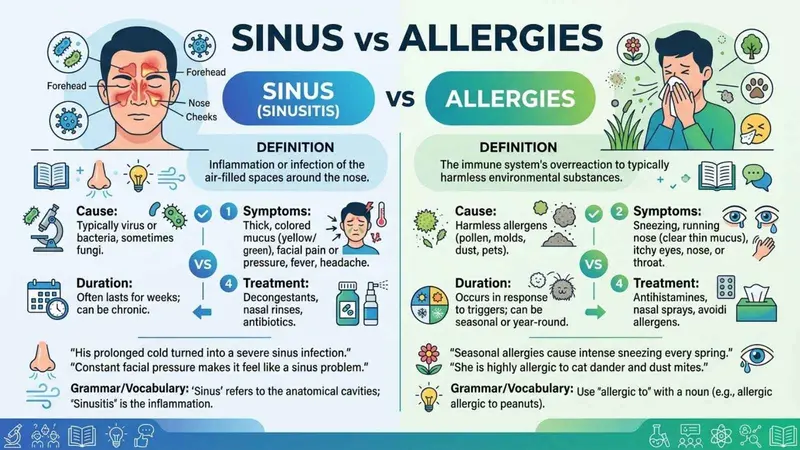
Your nose is stuffy. Your head feels heavy. You keep reaching for a tissue. You ask yourself: is this allergies, or is this a sinus infection? Many people feel stuck on this question every year.
The symptoms can look almost the same. Both can give you a stuffy nose, a headache, and pressure in your face. But the cause is not the same. Allergies happen when your body reacts to things like pollen, dust, or pet hair. A sinus infection happens when the spaces inside your nose get swollen and blocked, often from a virus or bacteria.
People search this topic when they feel sick and want a fast answer. They want to know if they need rest and water, or if they need to see a doctor. They also want to know which medicine will actually help.
This article gives you the short answer first. Then it explains the cause, the key differences, common mix-ups, real examples, and simple advice. By the end, you will feel ready to figure out what is really going on.
Note: This article gives general health information only. It is not medical advice. Please see a doctor for a real diagnosis.
Sinus or Allergies – Quick Answer
Here is the short version:
- Allergies often come with itchy, watery eyes, sneezing, and clear mucus. Symptoms often show up at the same time each year, or right after contact with dust, pollen, or pets.
- Sinus infections often come with thick mucus, facial pain, and sometimes a fever. Symptoms often follow a cold and last more than 10 days.
If your eyes are itchy and your mucus is clear, allergies are more likely. If you have facial pain, thick mucus, and the problem has lasted over a week, a sinus infection is more likely.
What Causes Sinus Problems and Allergies?
Allergies start when your immune system reacts to something harmless, like pollen, mold, dust, or pet fur. Your body sees this as a threat. It releases a chemical called histamine. This causes sneezing, itching, a runny nose, and swelling inside your nose.
A sinus infection, also called sinusitis, is different. It happens when the small spaces around your nose, called sinuses, become swollen and blocked. This often happens after a cold. Mucus gets stuck inside. This can lead to pressure, pain, and sometimes an infection from bacteria.
The two problems can be linked. Long-term allergies can cause swelling that blocks your sinuses. This can lead to a sinus infection later. So you might deal with both at once.
Symptom Comparison: Allergies vs Sinus Infection
| Symptom | Allergies | Sinus Infection |
| Itchy or watery eyes | Common | Rare |
| Mucus color | Usually clear | Often thick, yellow or green |
| Fever | Rare | Sometimes present |
| Facial pain or pressure | Rare | Common |
| How long it lasts | As long as exposed to the trigger | Often more than 10 days |
| Pattern | Often seasonal or after contact with a trigger | Often follows a cold |
This table is a general guide, not a diagnosis. Some people have both conditions at the same time, which can make symptoms harder to sort out.
Which One Do You Likely Have?
Think about your own pattern of symptoms to get a better idea:
- If your symptoms show up every spring or fall, or right after being around dust or pets: This points more toward allergies.
- If your symptoms started after a cold and have lasted more than 10 days, especially with facial pain: This points more toward a sinus infection.
- If you have itchy eyes, sneezing, and clear mucus: This points more toward allergies.
- If you have thick mucus, pain around your cheeks or forehead, and maybe a fever: This points more toward a sinus infection.
- If you are not sure, or symptoms are severe or long-lasting: See a doctor. They can check you and give a clear answer.
Common Mistakes People Make
Here are common mix-ups:
- Believing mucus color always tells the full story. Thick yellow or green mucus often points to a sinus infection, but it is not a perfect rule on its own.
- Assuming a sinus infection always needs antibiotics. Many sinus infections are caused by a virus, not bacteria. These often get better on their own with rest and fluids.
- Ignoring allergy treatment because it “isn’t serious.” Long-term, untreated allergies can lead to ongoing sinus blockage and infections.
- Treating sinus pain only with allergy medicine. Antihistamines help with allergies, but they may not fix a sinus infection, since the cause is different.
- Waiting too long to see a doctor. If symptoms last more than 10 days, get worse after improving, or come with a fever, it is time to get checked.
Everyday Examples
A typical allergy pattern: “Every spring, my eyes get itchy and watery, and I sneeze a lot. It clears up once pollen season ends.”
A typical sinus infection pattern: “I had a cold last week. Now my face hurts around my cheeks, and my mucus is thick and yellow. It has lasted 12 days.”
A mixed case: “I have allergies every fall. This year, it turned into facial pain and pressure that won’t go away, even after my usual allergy symptoms faded.”
A message to a doctor’s office: “I’m not sure if this is allergies or a sinus infection. My symptoms have lasted two weeks and I now have a low fever.”
Search Trends & Common Questions
People search “sinus or allergies” most often during spring and fall, when pollen levels rise. Search interest also rises during cold and flu season, since colds often lead to sinus blockage.
Across the US, UK, and other English-speaking countries, the questions people ask are very similar: how long symptoms last, what mucus color means, and whether they need to see a doctor. Most people search this topic while they are sick and want a fast, clear answer rather than a long medical article.
Comparison Table: Related Terms
| Term | What It Means |
| Allergic rhinitis | The medical term for nasal allergy symptoms |
| Sinusitis | The medical term for a sinus infection |
| Seasonal allergies | Allergies tied to a certain time of year, like spring pollen |
| Chronic sinusitis | A sinus infection or swelling that lasts a long time |
| Postnasal drip | Mucus that drips down the back of the throat, common in both conditions |
FAQs:
1. How can I tell if it’s allergies or a sinus infection? Look at your symptoms. Itchy eyes and clear mucus point to allergies. Facial pain, thick mucus, and symptoms lasting over 10 days point to a sinus infection.
2. Does mucus color always show which one I have? No. It is a helpful clue, but not a guaranteed answer on its own.
3. Can allergies turn into a sinus infection? Yes. Long-term swelling from allergies can block your sinuses and lead to an infection.
4. Do I need antibiotics for a sinus infection? Not always. Many sinus infections are caused by a virus and improve on their own. A doctor can tell if antibiotics are needed.
5. Why do allergies and sinus infections feel so similar? Both cause swelling inside the nose, which leads to similar symptoms like congestion and pressure.
6. When should I see a doctor? See a doctor if symptoms last more than 10 days, get worse after improving, or come with a fever or strong facial pain.
7. Can I have allergies and a sinus infection at the same time? Yes. This is common and can make it harder to tell the two apart without a doctor’s help.
Conclusion:
Allergies and sinus infections can feel very alike, but they come from different causes. Allergies happen when your body reacts to triggers like pollen or dust. Sinus infections happen when the spaces around your nose get blocked and swollen, often after a cold.
Watch for a few key clues. Itchy eyes, clear mucus, and a seasonal pattern point toward allergies. Thick mucus, facial pain, fever, and symptoms lasting more than 10 days point toward a sinus infection. Sometimes both happen together, which can make things harder to sort out on your own.
If your symptoms are mild and familiar, simple care like rest, fluids, and the right over-the-counter medicine may help. If symptoms are severe, long-lasting, or come with a fever, talk to a doctor. They can check you closely and help you get the right treatment, so you can feel better faster.

Ethan Carter is a language writer at Wordellect who helps readers understand word differences, grammar rules, and spelling variations through simple and accurate guides.







