You pick up a shiny metal thing. Maybe a door handle. Maybe an old coin. You’re not sure what it’s made of. Bronze? Brass? Both look warm and golden. Most people can’t tell them apart just by looking.
This is why people search “bronze or brass” so much. Both metals show up a lot. You see them in home items, jewelry, and statues. They can look almost the same at first look. But they are not the same metal. They are made from different things.
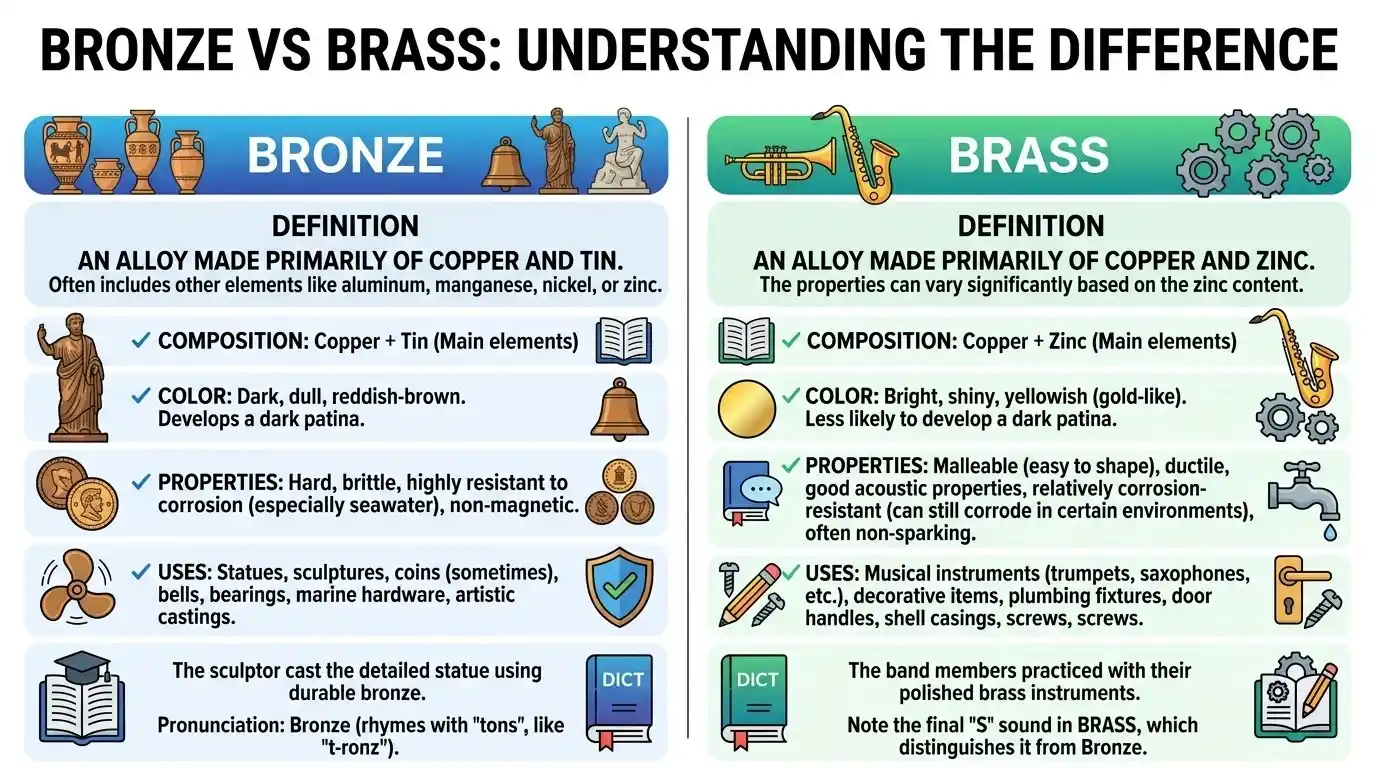
Here is the simple answer: Manufacturers make bronze by mixing copper with tin. They make brass by mixing copper with zinc.. Both are what we call an “alloy.” That just means two metals melted together to make a new, stronger metal.
In this article, you will learn what each metal is made of. You will learn how to tell them apart by look and sound. You will learn where each one is used. And you will learn how to stop mixing them up.
Bronze or Brass – Quick Answer
- Bronze = copper + tin. Deep red-brown color. Used for statues, bells, and coins.
- Brass = copper + zinc. Bright gold-yellow color. Used for door handles, music tools, and decor.
Example: “The old bell was made of bronze.” “The bathroom handles were made of brass.”
What Is Bronze Made Of?
Manufacturers make bronze by mixing copper with tin. People have used bronze for thousands of years. In fact, historians named an entire period the Bronze Age because people used bronze to make better tools and weapons.
Bronze is strong and durable. People use it to make statues, bells, medals, boat parts, and other long-lasting items. Bronze also resists water damage, so builders and artists often choose it for outdoor objects and things used near the sea.
What Is Brass Made Of?
Brass is copper mixed with zinc. Brass became popular later, mostly in the 1600s and 1700s. It was cheap and easy to shape into different forms.
Brass looks brighter and more golden than bronze. You see it in door handles, keys, music horns like trumpets, and home decor. Brass is easy to shape and polish. This is one reason people like it for small, fancy items.
Bronze vs Brass: Key Differences
This is not about spelling or country. These are two different metals made from different things.
| Feature | Bronze | Brass |
| Made from | Copper + tin | Copper + zinc |
| Color | Deep red-brown | Bright gold-yellow |
| Common use | Statues, bells, coins, boats | Door handles, horns, decor |
| Strength | Very strong | Strong, but easy to shape |
| Water damage | Holds up well | Holds up okay |
| History | Used since old times | Popular from the 1600s |
How Can You Tell Them Apart?
Here are easy ways to check.
Look at the color. Bronze looks darker, more red-brown. Brass looks brighter, more like gold.
Check the weight. Bronze often feels a bit heavier. Tin is heavier than zinc.
Listen to the sound. Bronze makes a deep, rich sound when hit. This is why bells are made of bronze. Brass makes a brighter, sharper sound. Manufacturers make horns like trumpets from brass because brass produces a clear, bright sound.
Think about where you saw it. An old statue, coin, or bell? Likely bronze. A door handle, key, or horn? Likely brass.
Which One Should You Pick?
Pick the metal based on what you need.
For outdoor statues, bells, or boat parts: Pick bronze. It holds up well outside and near water.
For door handles and home decor: Pick brass. It’s easy to shape, looks bright, and often costs less.
For music horns: Brass is the normal pick for horns like trumpets, since it makes a bright, clear sound.
For jewelry or small decor: Many people use both metals, but manufacturers choose brass more often for affordable jewelry because they can shape it into small designs easily.
Common Mistakes with Bronze and Brass
Mistake 1: “This trophy is brass.” (but it’s really bronze) Fix: Check the color and weight. Trophies and medals are often bronze.
Mistake 2: People often say, “These brass horns are made of bronze.”
Fix: Manufacturers make horns like trumpets from brass, not bronze. Many people still confuse these two metals.
Mistake 3: Thinking both metals look the same in every photo, so they must be the same. Fix: Always check the material before you decide, because lighting in photos can make brass and bronze look alike.
Mistake 4: Thinking bronze and brass are just old and new names for one metal. Fix: They are two different metals, not two names for one thing.
Bronze and Brass in Everyday Examples
In shopping ads: “Solid brass door handle, old-style look.” “Bronze garden statue, holds up in any weather.”
News reports said, “Workers found old bronze coins at the dig site.”
In social media: “Found the perfect brass mirror for my room! ” “This bronze statue has stood in the square for 100 years.”
In formal writing: “Third place winners got bronze medals.” Here is an active voice version:
Workers cleaned the building’s brass handles before the big event.
Bronze or Brass – Search Data and Trends
People search both words a lot, but for different reasons.People often search for “brass” when they look for kitchen and bathroom design ideas because brass handles and fixtures are a popular trend. They usually search for “bronze” when they read about history, art, sports awards, or ancient artifacts.
This stays about the same in the US, UK, Canada, Australia, and other English-speaking places, since this is not about country, it’s about topic. “Brass” searches go up during home fix-up seasons. “
| Keyword Variation | Common Topic | Typical Use |
| Bronze | History, art, sports | Statues, medals, bells |
| Brass | Home decor, music | Door handles, horns, fixtures |
| Bronze medal | Sports events | Third place award |
| Brass fixtures | Home fix-up | Kitchen and bathroom parts |
Frequently Asked Questions
1. Is bronze more costly than brass? Sometimes, since tin often costs more than zinc. But the price also depends on the item’s size and work put into it.
3. Do bronze and brass rust? Neither one rusts like iron does. But both can get a green coat over time, called patina, mostly bronze, when it sits in air and water for a long time.
4. Which metal is better for outdoor use? Bronze holds up better outside, mostly near water. People use bronze for boat parts and outdoor statues because it is strong and resists water damage.
6. How can I check at home if something is bronze or brass? Check the color first. Bronze looks more red-brown. Brass looks more gold. You can also check the weight, since bronze often feels a bit heavier.
A Little History Behind Both Metals
Bronze came first, a long time ago. People started making bronze around 3000 BC. They mixed copper and tin to make tools stronger than plain copper. This was such a big deal that a whole age in history got its name: the Bronze Age.
Brass came later. People did try early forms of it long ago too, but it became more common from the 1600s onward, once people learned better ways to work with zinc. Since brass was easy to shape and shine, it became a top pick for small parts like locks, horns, and fancy handles.
So in a simple way: bronze means strong and old. Brass means shiny and easy to shape. Keep that in mind, and you’ll pick the right word most of the time.
Quick Recap With Simple Examples
Let’s look at a few more simple lines to help this stick.
“The old ship’s anchor was made of bronze.” (strong, made for outdoor use) “The old brass lamp gave the room a warm glow.” (shiny, for indoor use) “Bronze statues have stood in the park for 100 years.” (tough, outdoor art) “She bought brass candle holders for the table.” (shiny, indoor decor) “The bronze medal shone bright at the event.” (old tradition, sports) “His trumpet, like most brass horns, had a bright gold shine.” (music, brightness)
See the pattern? Bronze connects to strong, old, and outdoor. Brass connects to shiny, small, and indoor. Once you spot this a few times, telling them apart gets easy.
Conclusion:
Bronze and brass are two different metals, not two names for one thing. Bronze is copper mixed with tin. It has a deep red-brown color and strong build, great for outdoor use. Brass is copper mixed with zinc. It has a bright gold-yellow color and is easy to shape into small, fancy items.
Pick bronze for statues, bells, boat parts, and outdoor items that face bad weather. Pick brass for door handles, music horns, and home decor that need a bright shine and fine shape.
Next time you’re not sure which metal you’re looking at, check the color, the weight, and where it’s used. With this simple guide, you can now tell bronze and brass apart with ease.

Ethan Carter is a language writer at Wordellect who helps readers understand word differences, grammar rules, and spelling variations through simple and accurate guides.







