You are writing a text, a caption, or maybe a baby shower card. You want to use the word, but you stop. Is it “bootie” or “booty”? Both sound the exact same. Both look close in spelling. This small pause trips up a lot of people.
This mix-up makes sense. English has a few word pairs like this, where two words sound alike but mean very different things. Bootie and booty are a good example. One is sweet and simple. The other means something totally different. Let’s clear it up.
Quick Answer
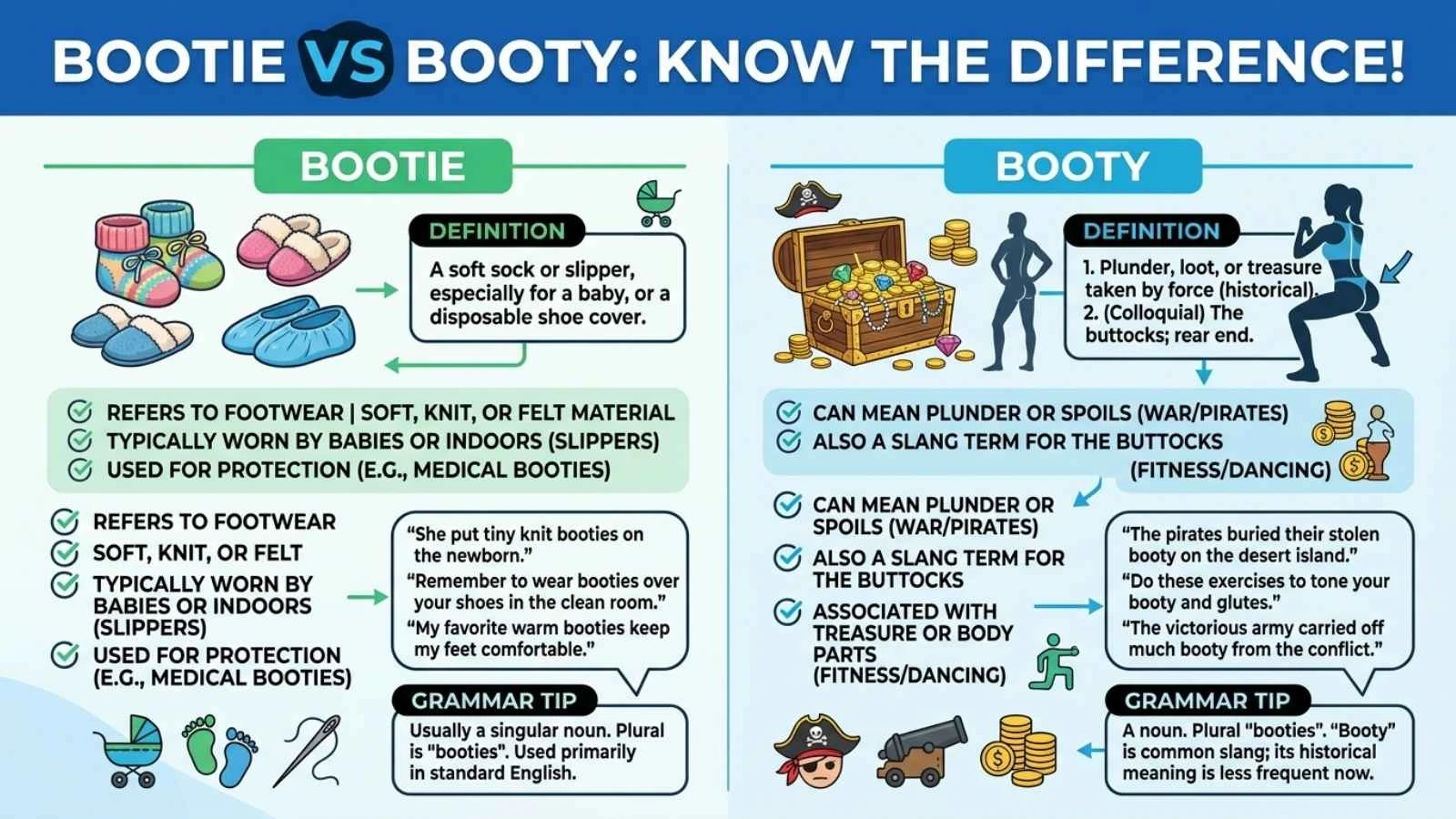
Bootie (sometimes spelled “bootee”) means a small, soft shoe, often worn by babies. It can also mean a short boot, like an ankle boot for adults.
Booty has a few meanings. It can mean treasure, like something pirates search for. It is also a common, casual word for a person’s backside.
Easy examples:
- “We bought soft booties for the new baby.” (baby shoes)
- “The pirates searched the island for buried booty.” (treasure)
- “She wore cute ankle booties with her outfit.” (a short boot)
In short: bootie is about small shoes or short boots. Booty is about treasure, or used casually to talk about a person’s backside.
Where These Words Came From
Both words come from different old roots, even though they sound the same today.
Bootie comes from the word “boot,” which has been used in English for a very long time to mean a type of shoe that covers the foot and ankle. Adding “-ie” or “-ee” at the end made it sound smaller and softer, which is why it became the natural word for baby shoes. This small, cute version of “boot” stuck around and is still used today for both baby shoes and short ankle boots.
Booty, when it means treasure, comes from an old Dutch or French word linked to “buit,” meaning stolen goods or plunder. This word entered English hundreds of years ago through trade and sea travel, which is why it became so tied to pirates and hidden treasure in stories.
The casual use of “booty” to mean a person’s backside came much later. Language experts believe it grew out of slang, mostly in the 1900s, possibly linked to the idea of something valuable or eye-catching, similar to how “treasure” already carried that feeling.
So even though both words sound the same, they grew from two totally separate paths in the history of English.
A Simple Way to Remember
Think of bootie as small and soft, just like a baby’s foot. The word even sounds gentle when you say it.
Think of booty as something bigger or bolder, whether that’s a treasure chest or a casual, playful word people use in daily talk.
Easy trick: bootie = baby shoe. Booty = treasure or backside. If you’re picturing something small and soft, go with bootie. If you’re picturing something big, exciting, or playful, go with booty.
Side-by-Side Table
| Word | Meaning | Example |
| Bootie | Baby shoe | “The baby wore pink booties.” |
| Bootie | Short ankle boot | “She loves wearing booties in fall.” |
| Booty | Treasure | “The map led to buried booty.” |
| Booty | Casual word for backside | “That’s a great pair of jeans.” |
Which One Should You Use?
If you’re talking about baby shoes: Use “bootie” (or “bootee”). Both spellings are seen in stores and baby products, though “bootie” is more common today.
If you’re talking about short ankle boots for adults: Use “bootie” as well. This word covers both baby shoes and short boots.
If you’re talking about treasure, like in a pirate story: Use “booty.” This is the classic, well-known meaning tied to hidden or stolen treasure.
If you’re using the casual, everyday slang meaning: Use “booty” as well, since it’s the common spelling used in casual talk and pop culture.
Easy rule to remember: Small shoe = bootie. Treasure or backside slang = booty.
Common Mistakes People Make
Mistakes
1: Wrong: “The baby wore cute pink booty.” Fix: “The baby wore cute pink booties.” (Baby shoes use “bootie,” not “booty.”)
2: Wrong: “The pirates searched for buried bootie.” Fix: “The pirates searched for buried booty.” (Treasure uses “booty,” not “bootie.”)
3: Wrong: Spelling it “booty” when writing about ankle boots. Fix: Ankle boots use “bootie,” matching the same spelling as baby shoes.
4: Wrong: Assuming “bootie” and “booty” are just two spellings of the same word. Fix: They are two separate words with different meanings, even though they sound the same out loud.
Everyday Examples
In a baby shower card: “Can’t wait to see this little one in tiny booties! Congrats on your new baby.”
In a fashion blog: “These leather booties are perfect for pairing with jeans this fall.”
In a kids’ pirate story: “The pirates dug for hours, searching for the hidden booty buried under the old oak tree.”
Casual conversation: “Have you seen her new booties? They go with everything.”
Search Trends & Usage Data:
Search interest in “bootie or booty” often comes from two very different groups: parents shopping for baby items, and shoppers looking at fall fashion, like ankle boots.
- Parents and baby shoppers: Search often for “baby booties,” comparing sizes, styles, and materials for newborns.
- Fashion shoppers: Search often for “ankle booties,” especially during fall and winter, when this type of shoe becomes popular.
- Pop culture and casual use: “Booty” also shows up a lot in music, social media, and everyday slang, completely separate from the shoe or treasure meanings.
Overall, both words stay in steady, common use, just in very different corners of everyday language.
Frequently Asked Questions:
1. Is “bootee” the same as “bootie”? Yes, both spellings are used for baby shoes, though “bootie” has become the more common spelling today.
2. Can “booty” ever mean a type of shoe? No. “Booty” does not refer to shoes. Shoes always use the spelling “bootie.”
3. Why do pirates search for “booty” in stories? “Booty” has meant treasure or stolen goods for hundreds of years, which is why it became a classic word in pirate stories and treasure hunts.
4. Is “booty” appropriate to use in formal writing? The treasure meaning is fine in formal writing, like history or adventure stories. The casual slang meaning is better suited for informal, everyday talk.
5. Which spelling should I use for a baby gift tag? Use “bootie,” since that’s the standard word for baby shoes on gift tags, cards, and baby product packaging.
6. Do other English words have this same kind of mix-up? Yes, quite a few. Words like “tale” and “tail,” or “sole” and “soul,” follow a similar pattern of sounding alike but meaning very different things.
7. Is one spelling more common in the UK versus the US? Not really. Both “bootie” and “booty” are used the same way in both American and British English, based on meaning, not region.
The Bottom Line:
Bootie or booty? These two words sound exactly the same, but they mean very different things. Bootie refers to small baby shoes or short ankle boots. Booty refers to treasure, or is used casually to talk about a person’s backside.
Just remember: bootie is small and soft, like baby shoes. Booty is bigger and bolder, like treasure or casual slang. Once you connect each word to its meaning, you’ll never mix them up again, whether you’re writing a baby card, a fashion post, or a pirate story.

Ethan Carter is a language writer at Wordellect who helps readers understand word differences, grammar rules, and spelling variations through simple and accurate guides.