You download a new app, and it says “beta version” right on the screen. A few weeks later, a friend tells you they’re using the “alpha version” of something else. You wonder, wait, which one comes first? Which one is more finished? A lot of people get stuck right here.
People search “alpha or beta” a lot when they see these words attached to apps, games, or software updates. Both words show up before something is fully released to the public, but they don’t mean the same stage of work. Mixing them up can make you think a program is more (or less) ready than it really is.
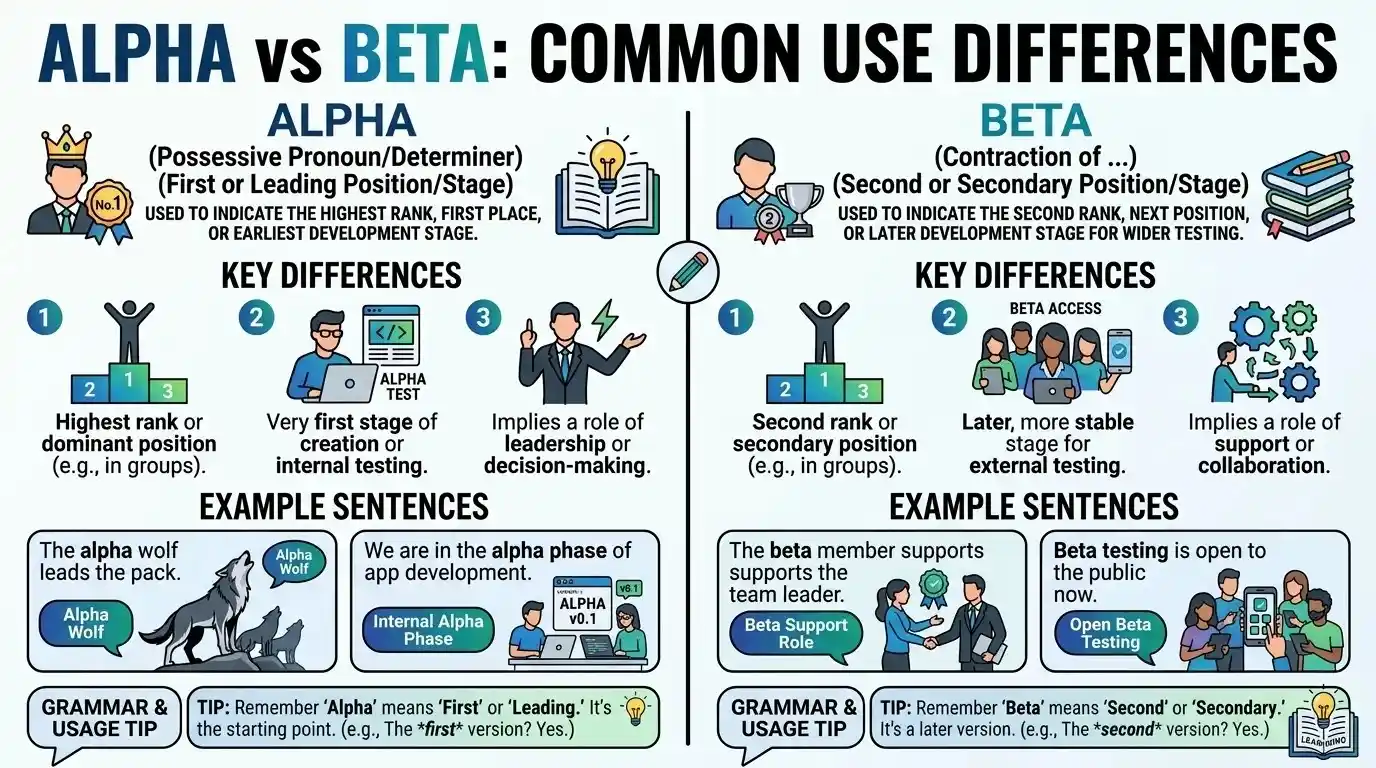
Here’s the simple answer: Alpha comes first. It’s an early, rough version, often only tested inside the company that made it. Beta comes next. It’s a more finished version, usually shared with outside users to catch remaining problems before the full release.
Both words actually come from Greek letters, the same alphabet that gives us words like “alphabet” itself. In this article, you’ll learn where these words come from, how each stage works, and how to know what to expect when you see either label on an app or program.
Alpha or Beta – Quick Answer
- Alpha = the first, early test version. Often buggy, unfinished, and tested mostly inside the company.
- Beta = the second, more finished test version. Shared with outside users to find any last problems before the full release.
Example: “The alpha version crashed a lot, but it helped the team fix major issues early.” “The beta version felt much smoother, since most big bugs were already fixed.”
Where Do the Words “Alpha” and “Beta” Come From?
Both words come from the Greek alphabet. “Alpha” is the first letter of the Greek alphabet, and “beta” is the second letter. In fact, the word “alphabet” itself comes from combining “alpha” and “beta,” the first two letters, into one word.
Since alpha comes before beta in the Greek alphabet, it made natural sense for software makers to borrow these words for testing stages. The first, roughest version became the “alpha” stage, and the next, more polished version became the “beta” stage, following the same order as the letters themselves.
This naming pattern has been used in the tech world for decades, and it’s now so common that most people connect “alpha” and “beta” with software testing, even if they don’t know the Greek letter connection.
Alpha vs Beta: Key Differences
This isn’t a spelling question or a regional word choice. These are two different stages in building and testing software.
| Feature | Alpha | Beta |
| Stage order | First stage | Second stage |
| Who tests it | Mostly the company’s own team | Outside users, often volunteers |
| How finished it is | Rough, many bugs expected | Mostly finished, fewer bugs |
| Public access | Usually not public | Sometimes open to the public to try |
| Goal | Find major problems early | Catch smaller issues before full release |
| Stability | Often unstable, may crash | More stable, but still not perfect |
How Do These Stages Work in Real Life?
The Alpha Stage This is the very first working version of an app or program. At this point, the basic features are there, but a lot of things may still break, look unfinished, or work in unexpected ways. Only the company’s own team, or a small group of trusted testers, usually gets access to this version. The main goal here is to catch big, obvious problems early, before more people get involved.
he Beta Stage
After developers fix the biggest problems, they move the program into the beta stage. They share it with a larger group of testers, and sometimes they open it to the public so people can sign up and test it. Beta testers use the program in real, everyday situations and report bugs or things that feel off. This stage helps the company polish small details before the full, official release.
After Beta: The Full Release
After developers finish beta testing and fix most issues, they release the software to the public.. This is the finished version most people use every day.
Which Version Should You Use?
Your choice depends on how much you want to help test something versus how stable you want your experience to be.
If you want the newest features first and don’t mind bugs: Try alpha versions, if they’re available to you. Just know that things may break or crash more often.
If you want to help test software but still enjoy a fairly stable experience, choose a beta version. It gives you a good balance between testing new features and using reliable software.. You’ll get new features early, with fewer major problems than an alpha version.
If you just want something that works smoothly, without any testing hassle: Stick with the full, official release, once alpha and beta testing are complete.
Common Mistakes with Alpha and Beta
Mistake 1: Thinking beta comes before alpha. Fix: Remember the Greek alphabet order. Alpha is first, beta is second, just like the letters themselves.
Mistake 2: Expecting a beta version to be completely bug-free. Fix: Beta versions are more stable than alpha, but they can still have small bugs and issues.
Mistake 3: Assuming every app skips straight to a full release without alpha or beta stages. Fix: Remember that many apps and games go through both stages. Companies often keep the alpha version private, so most users never see it.
Mistake 4: Thinking “beta” means the app is broken or not worth using. Fix: Beta versions are often quite usable. The label just means the company is still gathering feedback before the final release.
Alpha and Beta in Everyday Examples
In app store listings: “Join the beta program to try new features before everyone else.”
In gaming news: “The alpha test for the new game starts next month, invite-only.”
In tech emails: “Thank you for joining our beta program. Please report any bugs you find.”
In social media: “Just got into the beta for the new app, loving the new features so far! ” “Alpha testing this weekend, expect some crashes but it’s exciting to try something new.”
In formal writing: “The company plans to release the beta version next quarter after completing internal alpha testing.”
Alpha or Beta – Google Trends & Usage Data
Search data shows steady interest in both terms, mostly tied to gaming, apps, and tech products. “People search for “beta” more often because companies open beta versions to the public. Many users look for beta sign-ups, beta keys, and beta release dates. People search for “alpha” less often because companies usually keep alpha versions private and share them only with a small group of testers.
This pattern stays fairly similar across the US, UK, Canada, Australia, and other English-speaking countries, since this is a tech industry term, not a regional word choice. Interest in both words tends to spike around big game launches or major app updates, when companies open up testing to the public.
| Keyword Variation | Common Topic | Typical Use |
| Alpha | Early software testing | Internal or closed testing |
| Beta | Later software testing | Public or wider testing |
| Alpha version | Gaming, apps | First rough version |
| Beta version | Gaming, apps | Second, more polished version |
Frequently Asked Questions
1. Does alpha always come before beta? Yes. Alpha is always the first testing stage, followed by beta, matching the order of the Greek letters.
2. Can regular users try an alpha version? Usually not.Companies usually give alpha versions only to their own team or a small group of trusted testers.
3. Is a beta version safe to use? Beta versions are generally safe, but they may still have small bugs. It’s a good idea to back up any important data before trying one.
4. Why do companies use Greek letters for these testing stages? Since “alpha” and “beta” are the first two letters of the Greek alphabet, they naturally fit as names for the first and second testing stages.
5. What happens after the beta stage?
After developers finish beta testing and fix major issues, they release the software to the public.
6. Can I give feedback during a beta test? Yes. Beta testing is designed for this. Companies want feedback and bug reports from beta users to improve the final version.
7. Is there a stage before alpha?
Yes. Some companies use an earlier private stage called “pre-alpha.” However, most developers and users know and use the alpha and beta stages.
Conclusion:
“Alpha” and “beta” are two different stages in testing software, not two words for the same thing. Alpha comes first. It’s an early, rough version, usually tested only within the company. Beta comes next. It’s a more polished version, often shared with outside users to catch any last bugs before the full release.
Both words come from the Greek alphabet, where alpha is the first letter and beta is the second, which is exactly why alpha testing always happens before beta testing.
If you ever see one of these labels on an app or game, you’ll now know exactly what to expect. Alpha means rough and early. Beta means more polished, but still being tested. Either way, both stages help companies build better, more stable software before it reaches everyone else.

Ethan Carter is a language writer at Wordellect who helps readers understand word differences, grammar rules, and spelling variations through simple and accurate guides.