You just found a fossil in your Pokemon game. Now you have to pick one: Lileep or Anorith. Both come from ancient times. Both turn into strong Pokemon later. But which one should you choose?
A lot of players search “Lileep or Anorith” for a simple reason. The game only lets you pick one fossil at a time in most versions. Once you pick, you can’t go back and get the other one in that same game. This makes the choice feel like a big deal.
Some players care about battle stats. Some care about looks. It just want a simple answer so they don’t waste time thinking too hard about it.
This guide will help. You will learn what Lileep is like. They will learn what Anorith is like. You will see how they are different. They will also get a simple answer on which one may work best for your team.
By the end, you will feel sure about your pick. Let’s go step by step, in easy words.
Quick Answer
Here is the short answer.
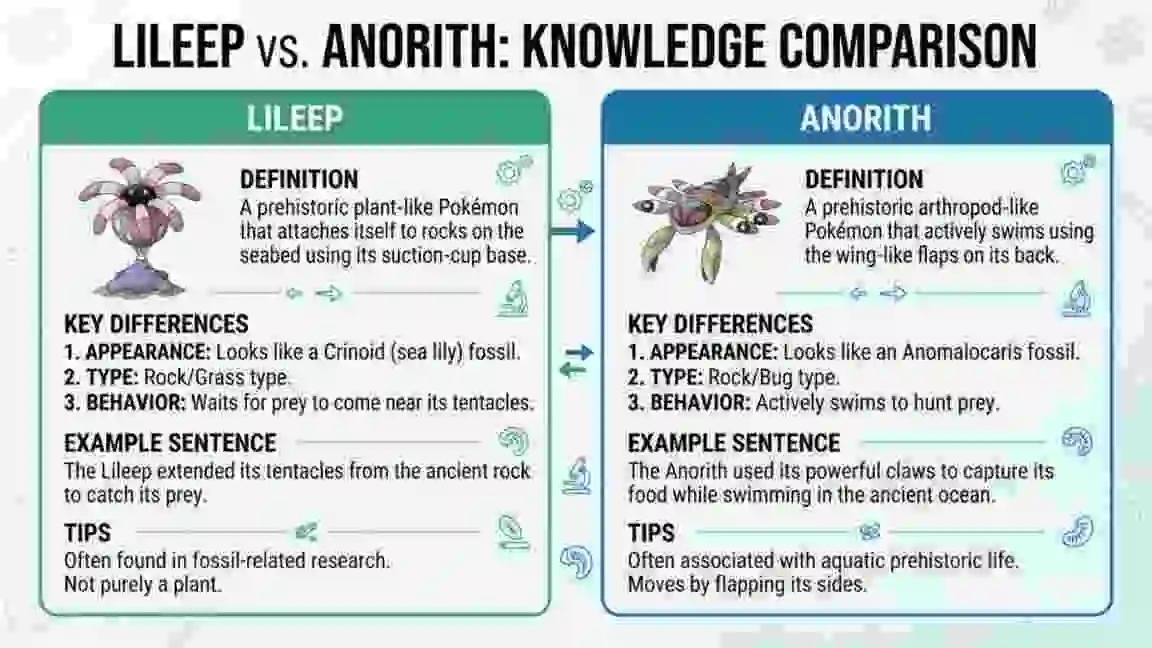
Lileep is a Rock and Grass type Pokemon. It moves slow, but it has strong defense. It grows into Cradily, a tough Pokemon that can take a lot of hits and slowly wear down other Pokemon over time.
Anorith is a Rock and Bug type Pokemon. It moves fast, and it hits hard early on. It grows into Armaldo, a strong attacker that can knock out other Pokemon fast.
Easy way to think about it:
- Pick Lileep if you like a slow, tough Pokemon that can outlast others in a fight.
- Pick Anorith if you like a fast, hard-hitting Pokemon that ends fights quickly.
Where These Pokemon Come From
Both Lileep and Anorith are based on real ancient sea creatures, brought back to life through fossils in the game’s story. This fits with many other fossil Pokemon in the series, like Kabuto or Omanyte from earlier games.
Lileep is based on a real ancient sea creature called a crinoid, sometimes known as a “sea lily.” These creatures looked like plants, but they were actually animals that lived attached to rocks on the ocean floor. This is why Lileep looks part plant, part sea creature, and why it holds a Rock and Grass typing in the game.
Anorith is based on a real ancient sea creature called Anomalocaris, one of the first big predators in Earth’s early oceans. Anomalocaris was fast and had strong front limbs used for grabbing prey. This matches Anorith’s quick, aggressive nature in the game, along with its Rock and Bug typing.
Stats and Battle Style Compared
Here is how the two compare once you look past their looks and history.
| Feature | Lileep (Cradily) | Anorith (Armaldo) |
| Type | Rock/Grass | Rock/Bug |
| Speed | Slow | Fast |
| Defense | Very high | Medium |
| Attack style | Slow, wears opponents down | Fast, hits hard early |
| Best role | Tank, stall battles | Sweeper, quick knockouts |
Cradily, what Lileep becomes, works well in slower battle styles. It can take hits, poison or hurt opponents over time, and outlast Pokemon that don’t hit hard enough to break through its defense.
Armaldo, what Anorith becomes, works well in fast battle styles. It hits hard early, and can knock out weaker Pokemon before they get a turn to act.
Which One Should You Pick?
Your pick depends on how you like to play.
If you enjoy slow, steady battles: Pick Lileep. Its final form, Cradily, can take a lot of damage and slowly turn a battle in its favor.
If you enjoy fast, aggressive battles: Pick Anorith. Its final form, Armaldo, hits hard and fast, ending fights before they drag on.
If you’re building a balanced team: Consider what other Pokemon you already have. Your team lacks a tough, defensive Pokemon, Lileep may fill that gap well
If you just want the cooler-looking Pokemon: This one comes down to personal taste. Lileep and Cradily have a calm, plant-like look. Anorith and Armaldo have a sharp, armored, insect-like look.
Simple rule to remember: Lileep for defense and patience. Anorith for speed and quick power.
Common Mistakes Players Make
Mistakes
1: Wrong: Thinking Lileep is weak just because it’s slow. Correct: Lileep’s final form, Cradily, has very high defense and can outlast many faster Pokemon in a long battle.
2: Wrong: Thinking Anorith is a bad pick because it can be fragile early on. Correct: Anorith grows into Armaldo, a strong, fast attacker that can take down opponents quickly once it reaches a higher level.
3: Wrong: Assuming you can get both fossils in the same game easily. Correct: In most versions, you can only pick one fossil per game, so choose based on your team’s needs.
4: Wrong: Ignoring type matchups when picking a fossil. Correct: Both are part Rock type, which means both share some of the same weaknesses, like Water and Grass moves, so plan your team around that.
Everyday Examples for Trainers
Choosing for a balanced team: “My team already has a fast attacker, so I picked Lileep to add some staying power.”
Choosing for speed-focused play: “I always go for quick, hard-hitting Pokemon, so Anorith was the clear pick for me.”
In online Pokemon chats: “Cradily is so underrated, it walls half the early game teams I run into.”
In a strategy guide: “Armaldo’s Swift Swim ability makes it a great pick in rain-based teams, thanks to its boosted speed.”
Frequently Asked Questions
1. Which fossil is better for beginners, Lileep or Anorith? Anorith may feel easier for new players, since its fast, direct attacks are simple to use effectively in early battles.
2. Can I get both Lileep and Anorith in the same game? Usually, no. Most games only let you pick one fossil, though some special events or later games have allowed trading to get both.
3. Which final form hits harder, Cradily or Armaldo? Armaldo generally hits harder and faster. Cradily focuses more on lasting through long battles and wearing opponents down over time.
4. Are Lileep and Anorith good in competitive battles? Both can work well in certain strategies, especially in specific weather-based or stall-based teams, though neither is considered a top-tier competitive pick.
5. What are Lileep and Anorith weak against? Both share a Rock typing, which makes them weak to Water, Grass, Fighting, Ground, and Steel type moves.
6. Does the choice affect the rest of my playthrough much? It can shape your team’s overall style, but both fossils are strong enough to help you complete the game comfortably either way.
The Bottom Line
Lileep or Anorith? Both are strong choices, just built for different play styles. Lileep grows into Cradily, a tough, patient Pokemon built to outlast opponents. Anorith grows into Armaldo, a fast, hard-hitting Pokemon built to end battles quickly.
If you like slow, steady battles, go with Lileep. If you like fast, aggressive battles, go with Anorith. Either way, you’re picking a solid fossil Pokemon that can carry its weight throughout your journey.
Whichever one you choose, both bring a piece of ancient history back to life in your game, giving your team a unique edge that few other Pokemon can match.

Ethan Carter is a language writer at Wordellect who helps readers understand word differences, grammar rules, and spelling variations through simple and accurate guides.