You hear two names. Iceland. Greenland. Both sound icy and far away. But something feels strange. Iceland has lots of green land. Greenland has lots of ice. Are the names backwards?
Many people search “Iceland or Greenland” because they get confused fast. The names trick people. Some think they are the same place. people want to travel to one but are not sure which one fits their trip. Some just want to learn an easy fact for school or fun.
These are two real, very different places. They sit near each other on the map. But they have different land, different people, and different history.
This guide gives you a simple answer first. It shows why the names seem backwards. they compares both places side by side. It helps you pick the right one for travel or learning. By the end, you will know the easy difference between Iceland and Greenland.
Iceland or Greenland – Quick Answer
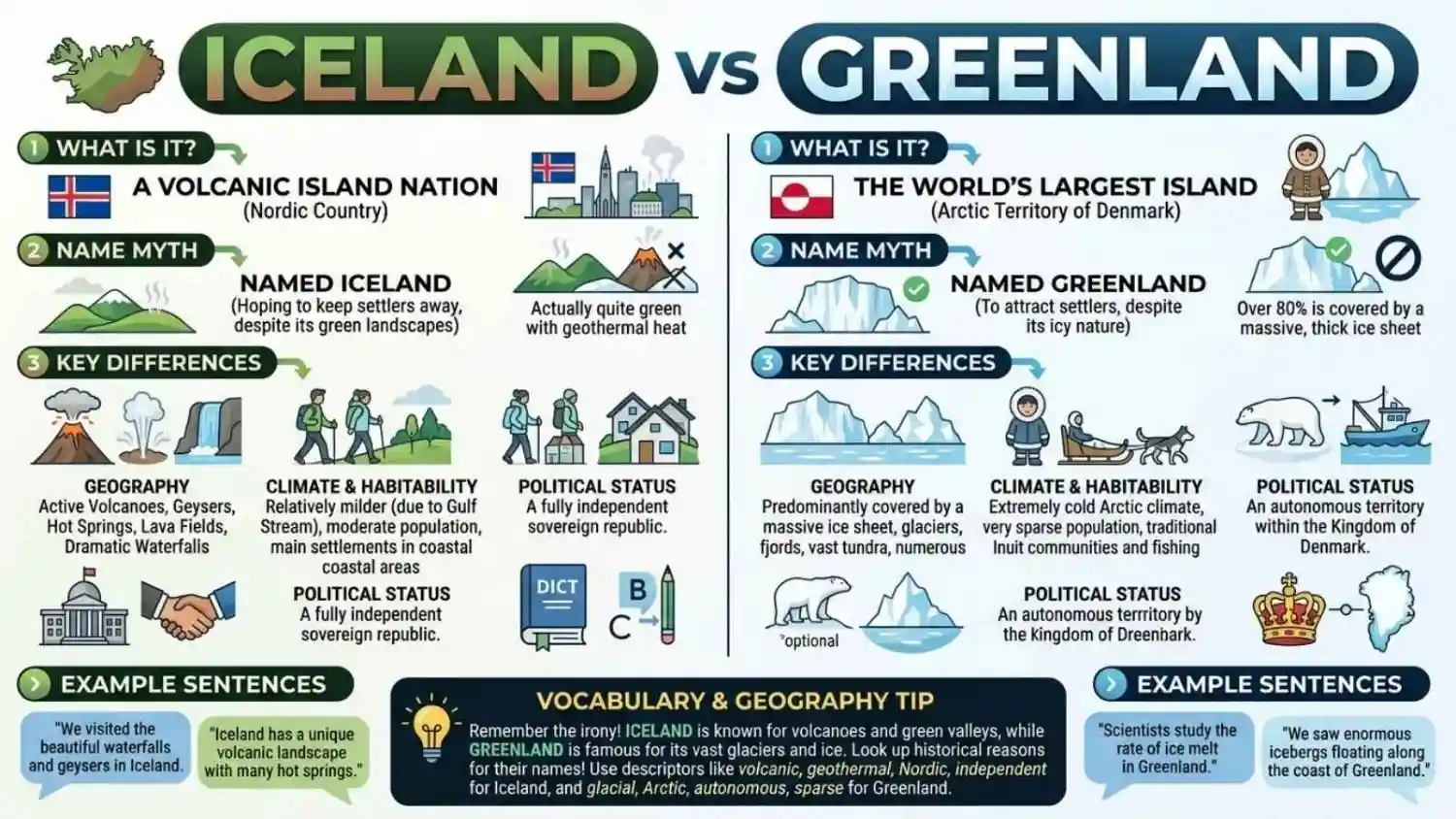
Iceland is a small island country. It has green hills, hot springs, and volcanoes. It is not covered in ice, even though the name says “ice.”
- “Iceland has amazing hot springs and waterfalls.”
- “Reykjavik is the capital of Iceland.”
Greenland is the world’s largest island. Most of it is covered by a huge ice sheet. It is not very green, even though the name says “green.”
- “Greenland is mostly covered in ice and snow.”
- “Greenland belongs to Denmark, but it governs itself in many ways.”
Simple way to remember: Iceland is green. Greenland is icy. The names are switched from what you’d expect.
Why Do the Names Seem Backwards?
This mix-up is not new. People have been confused for hundreds of years. The reason goes back to old history.
Iceland got its name from early Viking settlers. They arrived and saw ice in the fjords and mountains. They named the land “Iceland” because of what they saw on the coast. But most of Iceland is actually green, with grass, hills, and farmland. Only a small part of the country has ice and glaciers.
Greenland got its name in a very different way. A Viking explorer named Erik the Red found the land covered in ice and snow. But he wanted other people to move there with him. So he called it “Greenland” to make it sound nice and welcoming.
So the names are not really about accurate description. They came from old marketing tricks and first impressions, not from how the land truly looks today.
Geography and Living Comparison
Instead of comparing spelling, let’s compare the real land, people, and life in each place.
| Feature | Iceland | Greenland |
| Type | Independent country | Self-governing territory of Denmark |
| Size | Small island | World’s largest island |
| Ice cover | About 10% of the land | About 80% of the land |
| Population | About 370,000+ people | About 56,000 people |
| Capital city | Reykjavik | Nuuk |
| Famous for | Volcanoes, hot springs, Northern Lights | Glaciers, ice sheets, icebergs |
| Climate | Cool, but milder than its name suggests | Very cold, especially inland |
Iceland feels more green and lively in many parts, especially in summer. Greenland feels more icy and wild, with huge open ice fields covering most of the land.
Which One Should You Learn About or Visit?
Want hot springs, volcanoes, and green hills? Learn about or visit Iceland. It is easier to travel around, with more cities, roads, and tourist spots.
Want huge icebergs, glaciers, and a true Arctic feel? Learn about or visit Greenland. It feels more remote, wild, and untouched by busy city life.
Planning a short trip with easy travel options? Iceland is more visitor-friendly, with direct flights from many countries and well-known tourist routes.
Want a quiet, far-away adventure with fewer crowds? Greenland offers a deeper sense of remote nature, though travel there often takes more planning and cost.
Just curious for school or trivia? Both places make great topics, since their names trick almost everyone at first.
Common Mistakes People Make
- Mistake: Thinking Iceland is covered mostly in ice.
- Fix: Iceland is mostly green hills and farmland. Only a small part has ice.
- Mistake: Thinking Greenland is green and lush.
- Fix: Greenland is mostly covered by a giant ice sheet, not green land.
- Mistake: Thinking Iceland and Greenland are part of the same country.
- Fix: Iceland is its own independent country.
- Mistake: Mixing up which one is bigger.
- Fix: Greenland is much bigger. It is the largest island in the world. Iceland is far smaller.
- Mistake: Thinking the names describe the land correctly today.
- Fix: The names came from old history and old marketing, not from how the land truly looks now.
Iceland and Greenland in Everyday Life
In a travel blog: “We spent five days exploring Iceland’s waterfalls and hot springs before flying home.”
In a news headline: “Scientists Study Melting Ice in Greenland to Track Climate Change”
On social media: “Just landed in Iceland! Can’t wait to see the Northern Lights tonight. “
In casual conversation: “Did you know Iceland is actually green, and Greenland is actually icy? Wild, right?”
How Often Do People Search This?
People search “Iceland or Greenland” all year, with small spikes during travel planning seasons and school project time. Most people searching this are:
- Travelers comparing two cold, far-away destinations.
- Students learning an easy and fun geography fact.
- Curious people who just heard the names-trick fact for the first time.
Here is what the search trends usually show:
| Comparison Point | Iceland | Greenland |
| Tourist popularity | Very high | Lower, but growing |
| Main search interest | Travel, Northern Lights, hot springs | Ice sheets, climate change, remote nature |
| Best known fact | Green, not icy | Icy, not green |
| Flight access | Many direct flights | Fewer, often through Denmark or Iceland |
FAQs:
1. Why is Iceland called Iceland if it’s mostly green? Early settlers saw ice along the coast and named it based on that first view, even though most of the land is green.
2. Why is Greenland called Greenland if it’s mostly ice? A Viking explorer named it “Greenland” to make it sound appealing to new settlers, even though it is mostly covered in ice.
3. Is Greenland part of Iceland? No. They are two separate places. Greenland is connected to Denmark, while Iceland is its own independent country.
4. Which one is bigger, Iceland or Greenland? Greenland is much bigger. It is the largest island in the world. Iceland is a much smaller island country.
5. Which one is easier to visit? Iceland is usually easier to visit, with more flights, roads, and tourist activities.
Conclusion:
“Iceland or Greenland” is a fun mix-up with a simple answer once you know the history. Iceland is mostly green, with hills, farmland, and only a small amount of ice. Greenland is mostly icy, covered by a massive ice sheet, even though its name suggests something green and welcoming.
The names came from old Viking history, not from how the land actually looks. Iceland got its name from settlers who saw ice on the coast. Greenland got its name from an explorer who wanted to attract new settlers with a friendly-sounding name.
If you want green hills, hot springs, and easy travel, Iceland fits better. If you want a remote, icy, true Arctic experience, Greenland fits better. Either way, now you know the simple trick behind these two famous, often-confused names.

I explore and explain the difference between commonly confused English words to make writing clearer and more accurate. I provide simple, SEO-friendly explanations with examples to help you understand usage easily. I help improve grammar skills by making word differences easy to learn and remember.







