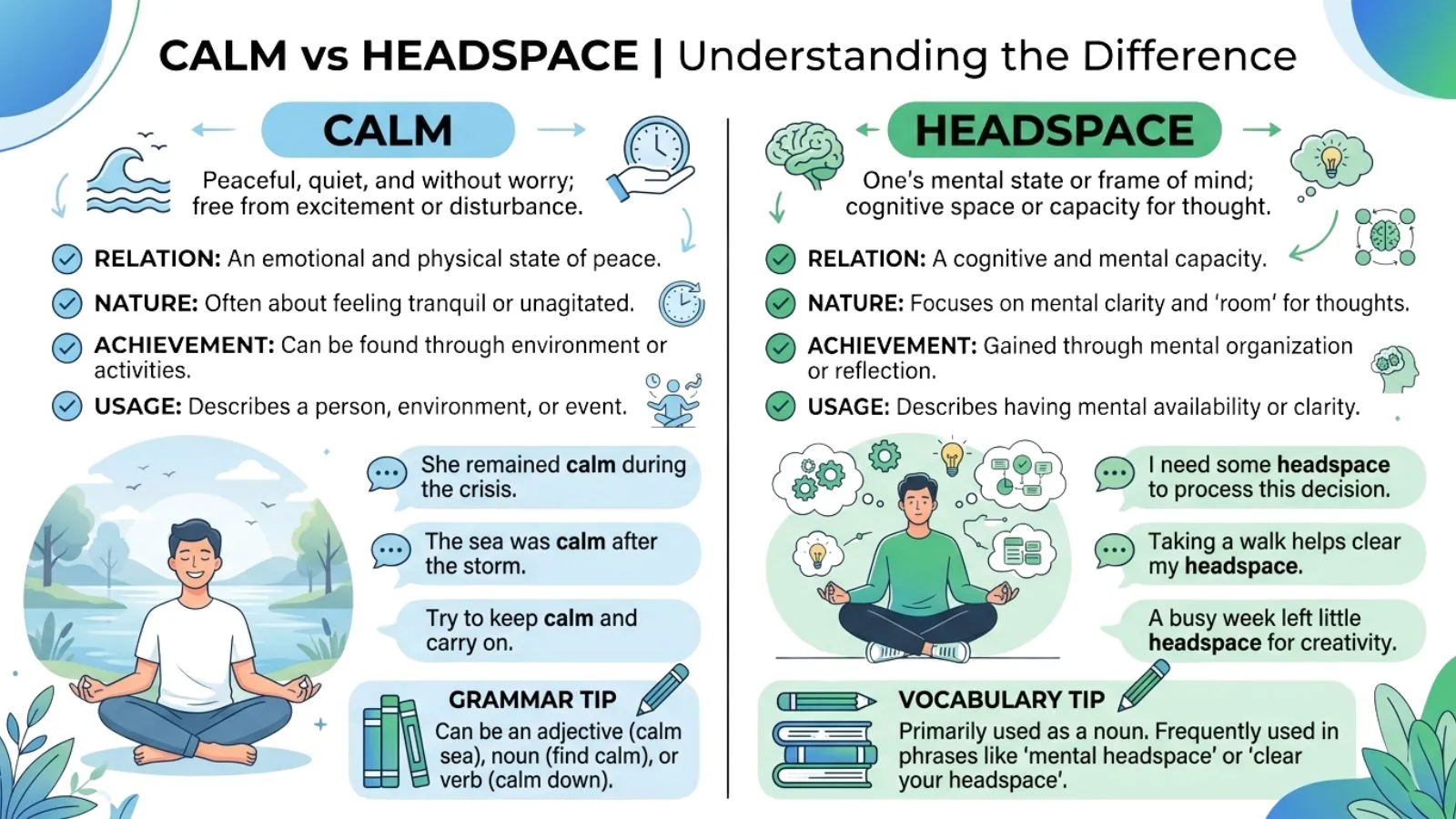
Feeling stressed and not sure which app to get, Calm or Headspace? You are not alone. Both apps say they help with better sleep, less stress, and a calm mind. Both show up at the top of every “best meditation app” list. That makes picking one feel hard, not easy.
People search for “calm or headspace” while trying to build a new habit, fix their sleep, or feel less worried without paying for therapy. Since both apps cost about the same and do many of the same things, they can look almost the same at first. But once you open them, they feel quite different.
Here is the good news. Once you know what each app does best, the choice gets much easier. <cite index=”16-1″>Calm is great for sleep, relaxing sounds, and soft stories, while Headspace is great for step-by-step lessons for people who are new to meditation.</cite> This article gives you a fast answer first. Then it looks at price, features, and who each app fits best.
Key Points to Know
- Calm is best if your main goal is better sleep.
- Headspace is best if you are new to meditation and want clear, step-by-step lessons.
- <cite index=”12-1″>Headspace costs about $12.99 a month or $69.99 a year. Calm costs about $14.99 a month or $69.99 a year.</cite>
- <cite index=”9-1″>Calm also has a one-time payment for life. Headspace has one too, but it costs more.</cite>
What’s in This Article
- Calm or Headspace Fast Answer
- Where These Apps Come From
- What Makes Each App Feel Different
- Price Compared
- Which One Should You Pick?
- Common Mistakes When Choosing
- Real-Life Examples
- Search Trends
- Side-by-Side Table
- FAQs
Calm or Headspace Fast Answer
Both apps help with meditation, sleep, and stress. But each one is stronger in a different area.
- Calm is strong in rest and sleep. <cite index=”8-1″>Calm’s sleep stories are read by well-known voices, and the app leans toward rest and sleep.</cite>
- Headspace is strong in teaching. <cite index=”15-1″>Headspace has over 500 guided sessions, set up in courses about worry, stress, sleep, and focus.</cite>
Easy Examples
- Someone who has a hard time falling asleep often likes Calm.
- Someone who has never tried meditation before often likes Headspace.
Simple Rule
Use:
- Calm if sleep and rest are your main goal.
- Headspace if you want to learn meditation, step by step.
| App | Best For | Feel |
| Calm | Sleep and rest | Soft, slow, calm |
| Headspace | Learning meditation | Friendly, clear, teacher-like |
Where These Apps Come From
<cite index=”15-1″>Headspace was started in 2010 by Andy Puddicombe, who used to be a Buddhist monk, along with Rich Pierson.</cite> <cite index=”15-1″>It began as a simple meditation app and has grown into a bigger app with sleep tools, workouts, focus music, and even coaching and therapy.</cite>
Calm came out a bit later and grew fast by focusing on rest and sleep more than teaching meditation. <cite index=”12-1″>Calm built its name around soft content, most of all its Sleep Stories, bedtime stories for adults meant to help people fall asleep.</cite>
Both apps became the biggest names in this space. <cite index=”7-1″>Headspace and Calm have been downloaded over 200 million times around the world.</cite>
What Makes Each App Feel Different
Even though both apps offer meditation and sleep tools, using them feels quite different.
Calm’s Style
<cite index=”12-1″>Calm uses pretty, clear pictures of nature, and you can change the background to a mountain lake, a rainy window, or a fireplace.</cite> <cite index=”7-1″>It uses soft colors like blue and green, so each part of the app feels calm and gentle.</cite>
Headspace’s Style
<cite index=”12-1″>Headspace uses a clean, white, cartoon-style look that feels friendly and easy, which makes meditation feel less scary to start.</cite> <cite index=”7-1″>Its tone is calm and steady, and it explains things in a clear, simple way, not too “deep” or strange.</cite>
Sleep Content Compared
<cite index=”8-1″>Calm’s Sleep Stories are its most famous part, read by celebrities. Headspace instead has Sleepcasts, which describe calm places instead of telling a full story.</cite> <cite index=”14-1″>Sleep is where the two apps differ the most, and Calm’s Sleep Stories are seen as its best feature.</cite>
Price Compared
Price is very close between these two apps, so it is rarely the biggest reason to pick one over the other.
<cite index=”12-1″>Headspace costs about $12.99 a month or $69.99 a year. Calm costs about $14.99 a month, with the same $69.99 a year price.</cite> <cite index=”9-1″>Both apps also offer a one-time payment for life. Calm’s lifetime price is lower than Headspace’s.</cite>
<cite index=”15-1″>Headspace also has a cheap student plan, plus a family plan that covers many people at once.</cite>
Simple Price Table
| App | Monthly Price | Yearly Price | Lifetime Price |
| Calm | About $14.99 | About $69.99 | Lower cost |
| Headspace | About $12.99 | About $69.99 | Higher cost |
Which One Should You Pick?
Ask yourself: Do I mostly want better sleep, or do I want to actually learn how to meditate?
Calm May Fit You If:
- Your main goal is falling asleep faster
- <cite index=”11-1″>You want a good night’s sleep with soft music.</cite>
- You like nature sounds and slow, quiet content
- You want something simple with less teaching
Headspace May Fit You If:
- <cite index=”11-1″>You are new to meditation and want to build a habit that lasts.</cite>
- You like clear steps, courses, and seeing your progress
- You want to know why each step helps you
- You want content for kids too, since Headspace has sessions for young children
Advice by Goal
| Main Goal | Likely Best Fit |
| Better sleep | Calm |
| Learning meditation from zero | Headspace |
| Handling worry as a beginner | Headspace |
| Calm sounds and bedtime stories | Calm |
Common Mistakes When Choosing
Many people make the same few mistakes when picking between these two apps.
Mistakes
1: Picking Based on Price Alone
- ❌ Picking whichever app costs one dollar less each month.
- ✅ <cite index=”14-1″>Both apps now cost about the same, so the real choice should be about fit, not price.</cite>
2: Thinking They Do the Exact Same Thing
- ❌ Thinking Calm and Headspace are basically the same app.
- ✅ Knowing that Calm leans toward rest and sleep, while Headspace leans toward teaching meditation step by step.
3: Skipping the Free Trial
- ❌ Paying for a full year before trying either app.
- ✅ <cite index=”14-1″>Trying both apps for a few days each before you pay for a full plan.</cite>
Calm or Headspace in Real Life
Emails or Messages
- I started using Calm before bed, and I’m sleeping so much better now.
- My therapist told me to try the Headspace course on worry this month.
News or Health Articles
- Health writers often list Calm and Headspace as easy tools to lower daily stress.
- <cite index=”13-1″>Some studies support that both apps can help, though few studies compare them side by side.</cite>
On Social Media
- Just finished my first Headspace beginner course, feeling proud!
- Falling asleep to a Calm sleep story every night now, love it.
In Formal or Work Writing
- Our company will offer a discount on Headspace for all staff this year.
- The clinic’s blog suggested Calm for clients who mainly struggle with sleep.
Calm or Headspace Search Trends
People search for “calm or headspace” a lot at the start of a new year, during stressful times, or when looking for a cheaper way to feel calmer than therapy.
Why People Search for This
- Wanting to feel less stressed or worried
- Trying to fix poor sleep
- Building a new meditation habit
- Comparing prices before paying
- Reading reviews before choosing an app
How Each App Is Searched
| App | Common Use | Popularity |
| Calm | Sleep, rest, soft sounds | Very High |
| Headspace | Meditation courses, beginner help | Very High |
Search interest for both apps often goes up in January, when many people set new goals, and again during stressful times all year.
Calm vs Headspace Side by Side
| Feature | Calm | Headspace |
| Main Focus | Sleep and rest | Learning meditation step by step |
| Sleep Content | Sleep Stories, famous voices | Sleepcasts, calm scenes |
| Look and Feel | Nature scenes, soft colors | Friendly, cartoon-style |
| Best For | People who want better sleep | People who are new to meditation |
| Kids Content | Yes, Calm Kids | Yes, sessions by age |
| Lifetime Price | Lower | Higher |
FAQs:
Is Calm or Headspace better for sleep? <cite index=”14-1″>Sleep is where Calm and Headspace differ the most, and Calm’s Sleep Stories are seen as the stronger sleep feature between the two.</cite>
Is Calm or Headspace better for beginners? <cite index=”11-1″>If you are new and want to build a real, lasting meditation habit, Headspace is often seen as the better choice.</cite>
Which app is cheaper? <cite index=”12-1″>Prices are close. Headspace is about $12.99 a month, and Calm is about $14.99 a month, but both cost about $69.99 a year.</cite>
Do both apps have free versions? <cite index=”13-1″>Yes, both offer some free content and a free trial, but the full app needs a paid plan.</cite>
Do real studies support these apps? <cite index=”13-1″>Yes, some research backs up both apps, though few studies compare them directly against each other.</cite>
Can these apps take the place of therapy? <cite index=”7-1″>No. Both apps offer helpful tools for self-care, but they are not a replacement for real therapy if you are dealing with serious mental health struggles.</cite>
Which app has better content for kids? Both have kid content, Calm Kids and Headspace’s sessions by age, so this often comes down to what your child likes best.
Wrap-Up:
The choice between Calm or Headspace comes down to your main goal. Calm is great for sleep, rest, and soft, calming content, especially its well-known Sleep Stories. Headspace is great for beginners who want a clear, step-by-step way to learn meditation as a real skill.
Price is close enough between the two apps that it should rarely be the main reason to choose one. Instead, think about what you truly need: better sleep, or a guided path into meditation. Many people suggest trying the free trial of each app for a few days before you pay for a full year.
Both apps are used by millions of people and have some real research behind them. But neither one takes the place of real therapy for serious mental health needs. Pick the one that fits your goal, give it a real try, and stay consistent, since using it every day is what makes any meditation app worth paying for.

Ethan Carter is a language writer at Wordellect who helps readers understand word differences, grammar rules, and spelling variations through simple and accurate guides.