You want a new credit card. You look online, and two big names keep showing up: American Express and Chase. Both give good rewards. Both have many fans. So how do you pick?
Here’s the good news. This gets easier once you know what each one is good at.
The Fast Answer
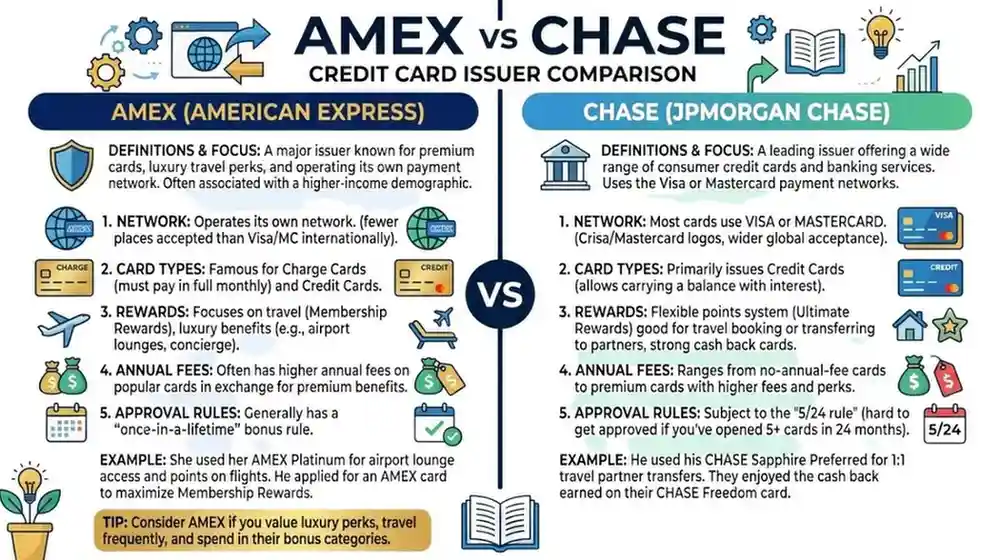
Amex, short for American Express, is often known for strong travel rewards, good help from real people, and a card that feels a bit fancy.
Chase is often known for being taken almost everywhere, good rewards for daily life, and cards that fit many kinds of spending.
- “I use my Amex for flights since the travel rewards are amazing.” (great for travel)
- “I use my Chase card everywhere since not every store takes Amex.” (works almost anywhere)
Both are big, well-known card companies. The real choice comes down to how you spend, and where you plan to use the card.
Why People Compare These Two
Both companies offer some of the top reward credit cards out there. Since both are known for good perks, people want to know which one gives them more for their own way of spending.
The mix-up also happens since these two work a bit differently behind the scenes. Amex often makes and runs its own cards. Chase works with a bigger card network. This is part of why Chase cards get taken in more places.
A Closer Look at Each One
Amex built its name on strong travel perks and great help when things go wrong. A lot of travelers love Amex for things like airport lounge access, hotel perks, and strong help if a purchase goes bad. The downside is that Amex is not taken everywhere, mostly at small stores or in some other countries.
Chase built its name on rewards that fit into daily life easily. Cards like the Chase Sapphire cards are known for mixing travel rewards with daily spending, like eating out and buying food. Chase cards also tend to get taken almost everywhere, since they run on a bigger card network.
Side-by-Side Table
| Amex | Chase | |
| Known for | Travel perks, fancy feel | Wide use, flexible rewards |
| Where it’s taken | Less common at small stores | Taken almost everywhere |
| Popular card | Amex Gold, Amex Platinum | Chase Sapphire Preferred |
| Help from the company | Often praised as great | Also well liked |
| Best for | Frequent travelers | Everyday spenders and travelers |
What Each One Is Good At
Amex often wins for its extras, like airport lounge access, strong trip help, and a support team many card owners say is fast and kind. If something goes wrong with a buy or a trip, Amex is often praised for fixing it fast.
Chase often wins for how easy its cards are to use in daily life. Since Chase cards get taken almost everywhere, card owners don’t have to think twice before using their card, whether they’re at a small local shop or making a big travel buy.
Which One Should You Get?
If you travel a lot and want strong perks like lounge access, hotel perks, and strong trip help, Amex is often the stronger pick. Just be ready to carry a backup card for places that don’t take it.
If you want one card that works well almost everywhere, with good rewards on both daily spending and travel, Chase is often the easier, more flexible pick for most people.
A lot of frequent travelers end up carrying both. They use Amex for its travel perks and Chase as a backup that gets taken almost anywhere.
Common Mistakes People Make
Picking a card just for rewards, without checking where it’s taken. A card with great rewards doesn’t help much if your favorite stores don’t take it.
Not checking the yearly fee. Some fancy cards from both companies come with a yearly cost. Check if the rewards you’ll really use make up for that cost.
Not checking what’s needed for the sign-up bonus. Many cards offer a big sign-up bonus, but they often need you to spend a set amount within a few months to get it.
Thinking one company is always better than the other. Both are strong choices. The better one really depends on your own spending habits and travel plans, not just which name feels more known to you.
Everyday Examples
In a text to a friend: “Just got approved for the Amex Gold, so excited for the food rewards.”
In an online review: “Switched to Chase Sapphire last year, love that I can use it almost anywhere.”
On social media: “Amex support just fixed my problem in five minutes, no complaints here.”
In a travel blog: “I always bring my Chase card as backup, since not every country takes Amex.”
What People Are Actually Searching For
Most people comparing these two cards fall into a few groups. Some are picking their very first reward card and want to avoid picking the wrong one. Others already have one and wonder if switching, or adding a second card, would help them earn more rewards.
Frequent travelers search this a lot, since travel perks can make a real difference in comfort and savings on big trips.
Frequently Asked Questions
Is Amex harder to get than Chase? This depends a lot on your credit history and pay, not just the company itself, so it can be very different from person to person.
Can I have cards from both companies at once? Yes, many people do just this. They use each card for what it does best.
Which one has better trip help? Both offer strong trip help on many of their cards. But the exact details can change a lot by card, so it’s worth checking the fine print.
Does Amex really get turned down more than Chase? It happens more than with Chase, mostly at small shops or in some countries. This is why many Amex users carry a backup card.
Which one is better for someone new to credit cards? Chase is often seen as a friendlier starting point, thanks to being taken almost everywhere and having rewards that fit many kinds of spending.
The Bottom Line:
Amex or Chase? Both are trusted names in the credit card world. But they’re good at slightly different things. Amex often wins with travel perks, fancy extras, and great help from real people. Chase often wins with flexible rewards and being taken almost everywhere you go.
Think about how you spend, how often you travel, and if being taken everywhere matters more to you than fancy extras. That one honest look at your own habits will usually point you to the better fit. It might even lead you to carry both one day.
At the end of the day, there’s no single “best” card that works for everyone. What matters most is picking the one that actually matches how you live and spend, day to day. Take your time, compare a few options, and pick the card that fits your life, not just the one with the loudest ads.

Ethan Carter is a language writer at Wordellect who helps readers understand word differences, grammar rules, and spelling variations through simple and accurate guides.







