PVC or CPVC? Many people ask this question when they build a house, fix a bathroom, or install new pipes. At first, both pipes look almost the same. They are strong, smooth, and made from plastic. Because they look alike, many people think they do the same job.
But PVC and CPVC are different. One works best for cold water. The other can carry both hot and cold water. Choosing the right pipe can save money and prevent problems later.
Homeowners, plumbers, and builders often search for “PVC or CPVC” because they want to know which pipe is better for their project. They want a simple answer before buying materials.
This guide explains PVC and CPVC in easy words. You will learn what these pipes are, how they are different, where people use them, and which one is best for your home. By the end, you will know exactly which pipe to choose.
PVC or CPVC: Quick Answer
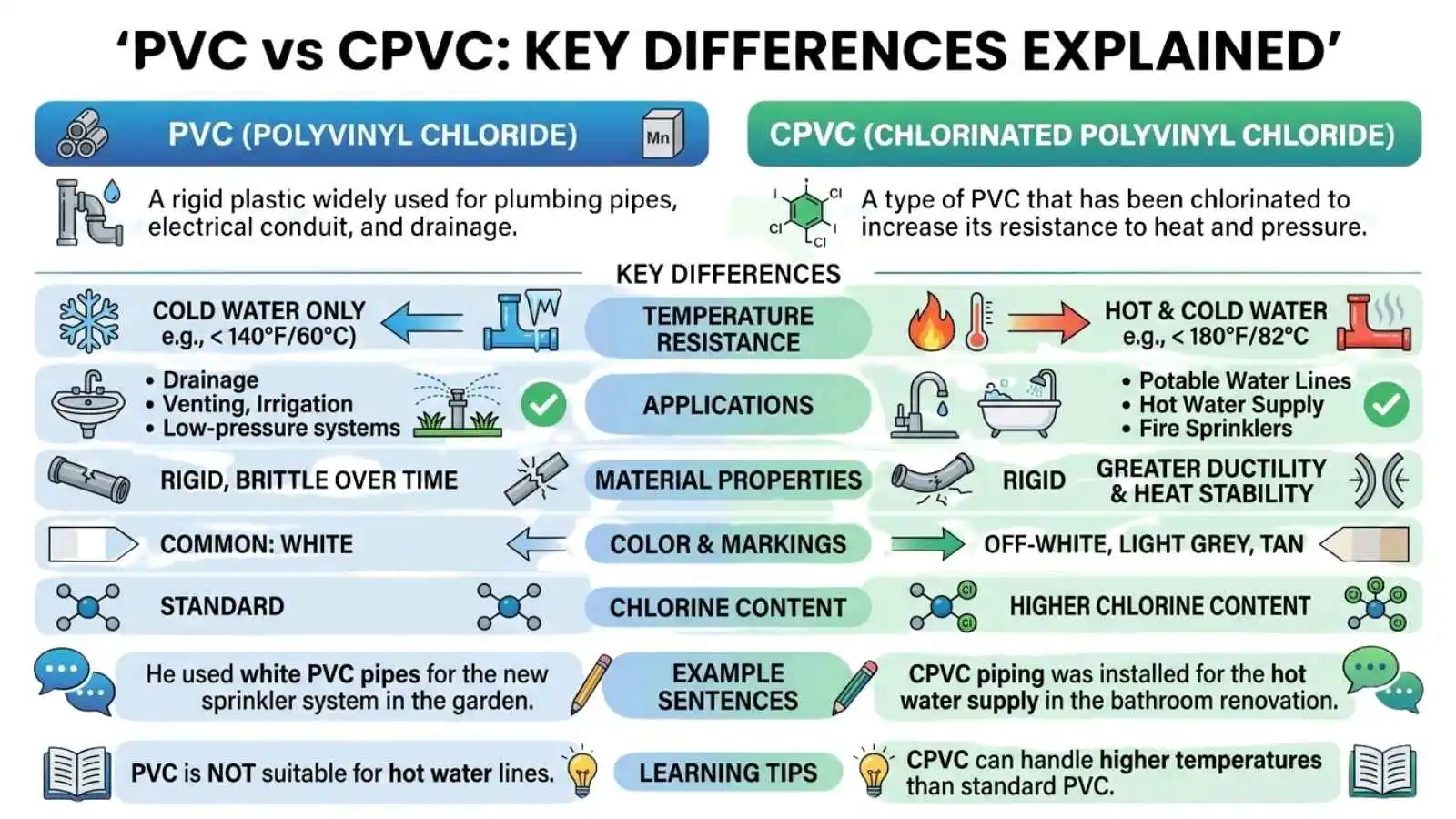
PVC is best for cold water, drain pipes, and outdoor use.
CPVC is best for hot water and cold water inside homes.
PVC costs less.
CPVC costs more because it can handle heat better.
Quick Comparison
| Feature | PVC | CPVC |
| Hot Water | No | Yes |
| Cold Water | Yes | Yes |
| Price | Lower | Higher |
| Heat Resistance | Low | High |
| Home Plumbing | Limited | Common |
| Drain Pipes | Yes | Yes |
What Does PVC Mean?
PVC stands for Polyvinyl Chloride.
It is a strong plastic material used in many products.
People use PVC to make:
- Water pipes
- Drain pipes
- Window frames
- Cable covers
- Garden systems
- Fencing
PVC became popular because it is:
- Lightweight
- Strong
- Easy to install
- Cheap
- Long lasting
Many homes around the world use PVC pipes every day.
What Does CPVC Mean?
CPVC stands for Chlorinated Polyvinyl Chloride.
CPVC starts as PVC.
Then manufacturers add more chlorine to it.
This extra chlorine makes CPVC stronger against heat.
Because of this, CPVC can safely carry hot water.
People often use CPVC in:
- Bathrooms
- Kitchens
- Hot water systems
- Commercial buildings
- Hospitals
- Hotels
CPVC is made for places where water becomes very warm.
Why Are PVC and CPVC Different?
PVC and CPVC may look similar, but they do different jobs.
PVC is designed for cooler temperatures.
CPVC is designed for higher temperatures.
PVC can become weak if water gets too hot.
CPVC stays strong even when hot water flows through it.
That is why many builders choose CPVC for indoor plumbing systems.
Simple Example
Imagine two cups.
One cup holds cold juice.
The other cup can hold hot tea.
PVC is like the cold juice cup.
CPVC is like the hot tea cup.
Both are useful, but each has its own purpose.
Where Is PVC Used?
PVC is used in many places.
It works well when heat is not a problem.
Drain Pipes
Many homes use PVC for drain systems.
Water flows away from sinks and bathrooms through PVC pipes.
Irrigation Systems
Farmers often use PVC pipes.
These pipes help move water to plants.
Swimming Pools
PVC is common in pool systems.
It carries water safely and lasts for years.
Outdoor Projects
PVC handles outdoor weather well.
People use it for:
- Garden watering
- Landscaping
- Drainage systems
Electrical Work
PVC also protects wires.
Many electrical pipes are made from PVC.
Where Is CPVC Used?
CPVC is popular in places that need hot water.
Bathrooms
Hot water travels through CPVC pipes.
These pipes stay strong under high temperatures.
Kitchens
Kitchen sinks often use CPVC pipes.
Warm water does not damage them.
Water Heaters
Water heaters connect well with CPVC systems.
Builders trust CPVC for this purpose.
Hospitals
Hospitals need clean water systems.
CPVC performs well in these environments.
Apartment Buildings
Large buildings often use CPVC because it lasts a long time.
PVC vs CPVC: Side-by-Side Comparison
| Feature | PVC | CPVC |
| Full Name | Polyvinyl Chloride | Chlorinated Polyvinyl Chloride |
| Color | White | Cream or Light Yellow |
| Hot Water Use | No | Yes |
| Cold Water Use | Yes | Yes |
| Heat Resistance | Lower | Higher |
| Cost | Less Expensive | More Expensive |
| Strength | Good | Very Good |
| Installation | Easy | Easy |
| Lifespan | Long | Long |
| Common Use | Drains | Water Supply |
Which Pipe Costs More?
PVC is cheaper.
This is one reason many people like it.
It gives good results without spending too much money.
CPVC costs more.
Its higher price comes from extra processing and better heat resistance.
Example
A homeowner installing a cold-water system may save money by choosing PVC.
Someone installing hot-water pipes may spend more for CPVC.
In the long run, using the correct pipe can prevent repairs.
Which Pipe Lasts Longer?
Both pipes can last many years.
Many systems stay in good condition for decades.
The lifespan depends on:
- Proper installation
- Water pressure
- Temperature
- Maintenance
PVC lasts a long time in cold environments.
CPVC lasts a long time in hot environments.
Using the right material helps pipes perform better.
Is PVC Better Than CPVC?
There is no single winner.
Each pipe is useful.
PVC is better when:
- Water stays cool
- Cost matters
- Drain systems are needed
CPVC is better when:
- Hot water is involved
- Heat resistance is important
- Indoor plumbing is required
The best choice depends on the project.
Advantages of PVC
PVC offers many benefits.
Low Cost
PVC is affordable.
Many homeowners choose it to save money.
Lightweight
PVC pipes are easy to carry.
Workers can install them quickly.
Strong Material
PVC handles pressure well.
It resists rust and corrosion.
Easy to Find
PVC is available in many stores.
It is used worldwide.
Advantages of CPVC
CPVC also has many benefits.
Handles Hot Water
This is its biggest advantage.
It can safely carry heated water.
Durable
CPVC stays strong over time.
It performs well in homes and businesses.
Chemical Resistance
CPVC resists many chemicals.
This makes it useful in different industries.
Long Service Life
Properly installed CPVC pipes can last for decades.
Common Mistakes with PVC or CPVC
People sometimes choose the wrong pipe.
Here are common mistakes.
Mistake 1: Using PVC for Hot Water
PVC is not designed for high temperatures.
Hot water may weaken it.
Correct choice: Use CPVC.
Mistake 2: Thinking They Are the Same
PVC and CPVC are different materials.
They serve different purposes.
Mistake 3: Choosing Only by Price
People sometimes buy the cheapest option.
But using the wrong pipe may lead to repairs later.
Mistake 4: Ignoring Local Building Rules
Some places require specific pipe materials.
Always check local regulations.
PVC or CPVC in Everyday Life
People talk about these materials in many situations.
In Emails
“We recommend CPVC for your home’s hot water lines.”
“PVC is a good option for outdoor drainage.”
In Construction News
“Builders continue to compare PVC and CPVC for modern homes.”
On Social Media
“Should I install PVC or CPVC in my bathroom?”
“I used CPVC because my house has a hot water system.”
In Professional Reports
“CPVC piping was selected because of its heat resistance.”
“PVC remains popular for drainage projects.”
Why Do People Search for PVC or CPVC?
Many people search online before buying pipes.
They ask questions like:
- Which pipe is better?
- Can PVC carry hot water?
- Why is CPVC more expensive?
- Which pipe lasts longer?
- Which pipe should I buy for my home?
People want simple answers.
They also want to avoid costly mistakes.
Understanding the differences helps them make better decisions.
PVC or CPVC Around the World
PVC is used almost everywhere.
It is common in:
- The United States
- Canada
- Australia
- India
- Pakistan
- The United Kingdom
CPVC is also popular.
It is widely used in homes with hot water systems.
Many plumbers recommend CPVC for kitchens and bathrooms.
Both materials play an important role in modern construction.
Frequently Asked Questions
Can PVC carry hot water?
No.
PVC is made mainly for cold water systems.
CPVC is a better choice for hot water.
Is CPVC stronger than PVC?
CPVC performs better under high temperatures.
Both materials are strong, but CPVC handles heat better.
Which pipe is cheaper?
PVC usually costs less.
CPVC costs more because it has better heat resistance.
Can PVC and CPVC be connected together?
Yes.
Special fittings and approved methods may be needed.
Which pipe is best for homes?
PVC works well for drains.
CPVC works well for hot and cold water supply systems.
How long do PVC pipes last?
PVC pipes can last for many years if used correctly.
Is CPVC safe for drinking water?
Yes.
Many homes use CPVC for drinking water systems.
Conclusion:
PVC and CPVC may look alike, but they are made for different jobs. Understanding the difference can help homeowners choose the right pipe and avoid problems later.
PVC is a good option for cold water, drainage systems, and outdoor projects. It costs less, is easy to install, and lasts a long time. Many people choose PVC because it is affordable and reliable.
CPVC is designed for higher temperatures. It can safely carry hot water and is commonly used in kitchens, bathrooms, and water supply systems. Although it costs more, it offers better heat protection.
Neither pipe is better in every situation. The best choice depends on how the pipe will be used. If you only need a pipe for cold water or drains, PVC is often enough. If your project involves hot water, CPVC is usually the smarter choice.
Knowing the differences between PVC and CPVC makes shopping easier and helps you build a plumbing system that lasts for years.

Ethan Carter is a language writer at Wordellect who helps readers understand word differences, grammar rules, and spelling variations through simple and accurate guides.