Is Santa real or is it your parents? This is a question many children ask as they grow older. They may start to notice small clues. They may wonder how Santa visits so many homes in one night. It may also notice that the gifts look like the ones their family buys.
The answer depends on what you mean by Santa.
Santa Claus is a famous Christmas character based on older stories and the real historical figure Saint Nicholas. The Santa who flies through the sky in a sleigh, visits every home in one night, and leaves gifts under the tree is part of a Christmas tradition and story.
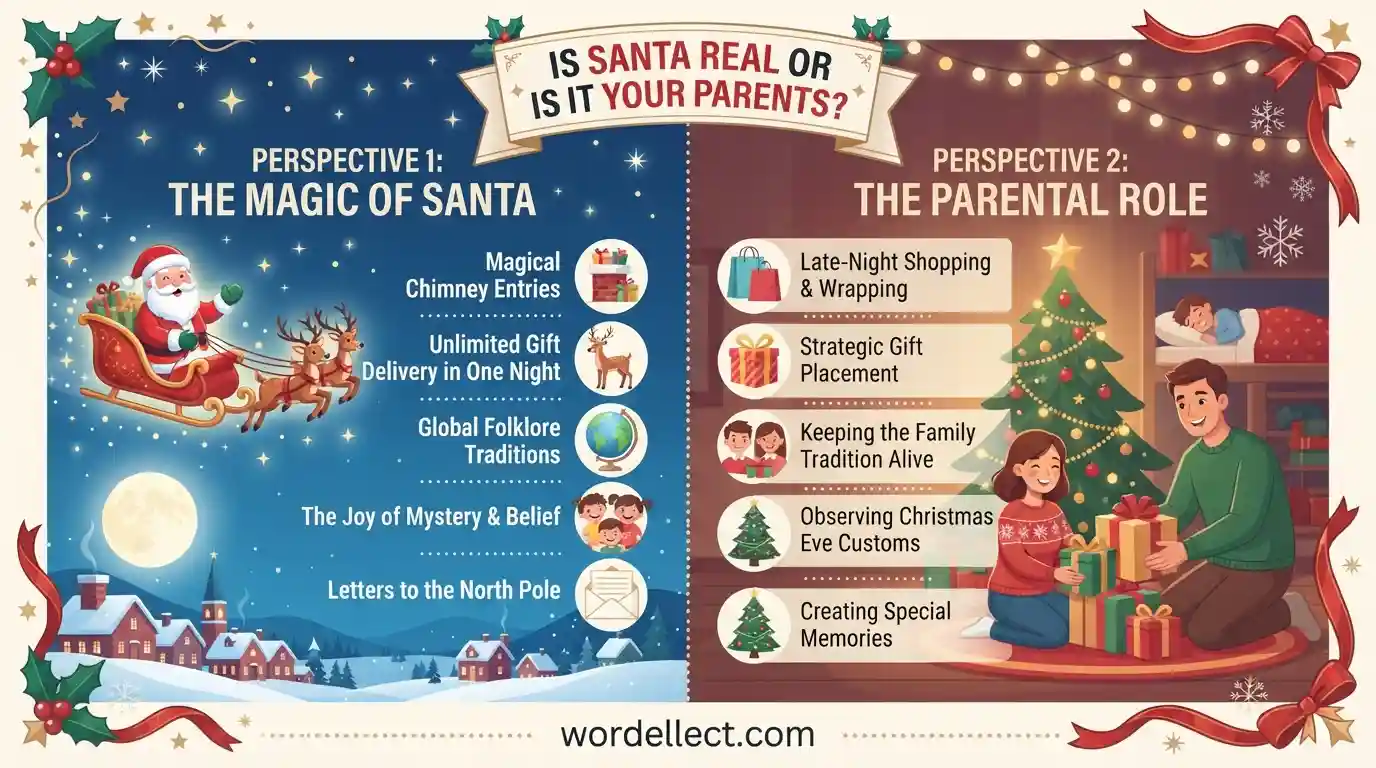
In many families, parents or other family members help create the Santa experience. They may buy gifts, wrap them, and place them under the Christmas tree.
This does not mean the fun was fake. Santa has become a special part of Christmas for many families. The story teaches ideas about giving, kindness, surprise, and joy.
This guide explains where Santa came from, why parents are involved, and what people mean when they ask if Santa is real.
Is Santa Real or Is It Your Parents? – Quick Answer
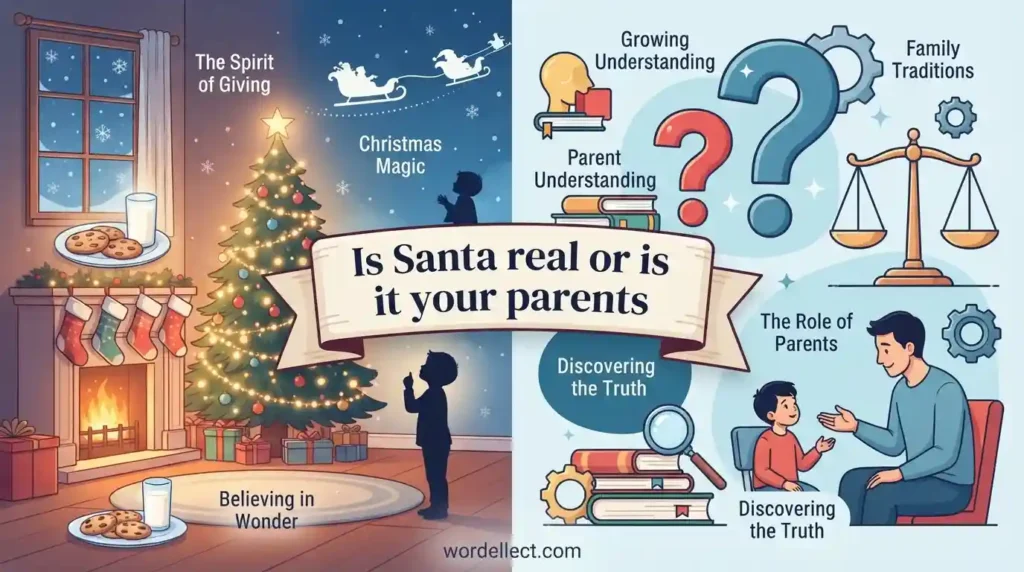
The Santa Claus who flies in a sleigh and delivers gifts to children around the world in one night is a Christmas story and tradition.
In many families, parents or other adults buy and place the Christmas gifts that children receive from Santa.
Santa is based in part on Saint Nicholas, a real person who lived many centuries ago. Stories about his kindness and gift giving helped shape the Santa Claus tradition.
So there are two parts to the answer:
- Saint Nicholas was a real historical person.
- The modern Santa Claus is a Christmas character based on stories and traditions.
- Parents and family members often help keep the Santa tradition alive.
The exact way families celebrate Santa can be different.
Who Is Santa Claus?
Santa Claus is a Christmas character known for giving gifts to children.
He is often shown as an older man with:
- A white beard
- A red suit
- Black boots
- A large bag of gifts
- A sleigh
- Reindeer
The modern Santa story says that he travels around the world on Christmas Eve and gives presents to children.
Many children also hear that Santa lives at the North Pole.
These details are part of the Santa story. They are not descriptions of a person who can be seen traveling around the world in one night.
Is Santa a Real Person?
Santa Claus, as people know him today, is not a real person who travels around the world in a flying sleigh.
However, the Santa tradition has a real historical connection.
One important figure behind the story is Saint Nicholas. He was a Christian bishop who lived many centuries ago. Stories about him describe him as a kind person who helped people and gave gifts.
Over time, stories about Saint Nicholas changed and mixed with other Christmas traditions.
This helped create the Santa Claus character known today.
Are Parents Santa?
In many families, yes, parents or other adults are the people who buy and prepare the gifts that children find from Santa.
For example, a parent may:
- Buy a Christmas gift.
- Wrap the gift.
- Put it under the Christmas tree.
- Tell the child that Santa brought it.
- Enjoy the child’s excitement.
But this is not the same in every family.
Some families do not use the Santa story. Some families say that Santa is a fun Christmas character. Others have grandparents, relatives, or friends who help with gifts.
There is no single way every family celebrates Christmas.
Why Do Parents Pretend to Be Santa?
Parents often take part in the Santa tradition because they want to make Christmas exciting for children.
The tradition can include:
- Giving surprise gifts
- Decorating the Christmas tree
- Leaving cookies for Santa
- Writing letters to Santa
- Hanging stockings
- Telling Santa stories
- Watching Christmas movies
For many families, these activities are about fun and family time.
The goal is often to create happy Christmas memories.
The Story Behind Santa Claus
The story of Santa did not appear all at once.
It developed over many years.
Saint Nicholas
Saint Nicholas is one of the most important figures linked to Santa Claus.
Stories about him describe a person known for kindness and giving.
He became connected with children and gift giving in many traditions.
Sinterklaas
In parts of Europe, stories about Sinterklaas became popular.
The name and traditions later influenced the English name Santa Claus.
Different countries developed their own versions of the gift-giving figure.
Modern Santa Claus
Over time, poems, stories, drawings, advertisements, movies, and other popular culture helped shape the Santa most people know today.
This version usually includes the red suit, reindeer, sleigh, North Pole, and Christmas Eve journey.
Santa Claus vs Saint Nicholas
Santa Claus and Saint Nicholas are connected, but they are not exactly the same figure.
| Figure | What It Means | Main Connection |
| Saint Nicholas | Historical religious figure | Known in stories for kindness and giving |
| Sinterklaas | Traditional European figure | Influenced later Santa traditions |
| Santa Claus | Modern Christmas character | Gift giving and Christmas celebrations |
The modern Santa story grew from older traditions rather than coming from one single story.
British English vs American English
There is no major difference in the basic meaning of Santa Claus in British and American English.
Both use Santa Claus.
However, some names can differ.
| American English | British English | Meaning |
| Santa Claus | Father Christmas | Christmas gift-giving figure |
| Santa | Santa | Short form |
| Christmas tree | Christmas tree | Decorated Christmas tree |
| Christmas Eve | Christmas Eve | Night before Christmas Day |
In the United States, Santa Claus is very common.
In the United Kingdom, Father Christmas is also widely used.
The traditions can still overlap.
Which Name Should You Use?
Use the name that is normal in your family or country.
In American English
Santa Claus and Santa are common.
Santa left gifts under the tree.
In British English
Father Christmas is also common.
Father Christmas is part of the Christmas tradition.
In Everyday Writing
You can use Santa when the context is clear.
The children are waiting for Santa.
There is no need to use a different name just because you are writing for children.
Common Mistakes About Santa
Mistake 1: Saying Santa and Saint Nicholas are exactly the same
They are related, but they are not exactly the same.
Saint Nicholas was a historical figure. Modern Santa Claus is a Christmas character shaped by many traditions.
Mistake 2: Saying every family uses Santa
Not every family celebrates Christmas in the same way.
Some families use the Santa story. Others do not.
Mistake 3: Saying all Christmas gifts come from Santa
In many families, parents and relatives give the gifts.
Some families may say the gifts are from Santa as part of the tradition.
Mistake 4: Thinking there is only one Santa tradition
Different countries have different Christmas customs.
The name, clothing, stories, and gift-giving customs can change.
Mistake 5: Saying Santa has always looked the same
The modern image of Santa developed over time.
Older traditions did not always show him in the same way people picture him today.
Is Santa Real in the Same Way Saint Nicholas Was?
No.
Saint Nicholas is considered a historical person. The modern Santa Claus is a character built from stories, traditions, and cultural changes.
This is why both statements can be true:
Saint Nicholas was a real historical figure.
And:
The modern Santa Claus is a Christmas tradition.
The flying sleigh, magical reindeer, North Pole home, and one-night trip are parts of the Santa story.
Is Santa Real or Is It Your Parents? Everyday Examples
Here are some simple examples of how people may talk about Santa:
- Is Santa real?
- Does Santa really come on Christmas Eve?
- My parents put gifts under the tree.
- Santa is part of our Christmas tradition.
- My family tells Santa stories every year.
- Children often write letters to Santa.
- Santa is based partly on Saint Nicholas.
- My parents helped make Christmas special.
- Some families do not celebrate with Santa.
- Santa Claus is a well-known Christmas character.
- Father Christmas is another name used in some places.
- The Santa story has changed over time.
How Do Parents Keep the Santa Tradition Alive?
Parents may use small traditions to make Christmas feel special.
For example, they may:
- Put gifts under the tree after children go to bed.
- Leave a plate of cookies.
- Leave a note from Santa.
- Hang Christmas stockings.
- Read Santa stories.
- Talk about Santa during December.
- Watch Christmas movies together.
These actions help create the feeling of a Christmas surprise.
For many families, the fun comes from the tradition itself.
What Happens When Children Find Out?
Children may learn about the real story at different ages.
Some notice clues on their own. Others hear about it from friends or older children.
When a child asks about Santa, families can choose how to explain the tradition.
A simple answer can be:
“Santa is a special Christmas tradition. The gifts come from people who love you and want to make Christmas happy.”
This keeps the focus on kindness and giving.
Related Search Questions
Is Santa Claus based on a real person?
Yes. Santa Claus is partly based on Saint Nicholas, a historical figure associated with kindness and gift giving. The modern Santa story developed much later and includes many traditions that are not historical facts.
Do parents buy Santa gifts?
In many families, parents or other adults buy the gifts that children receive as Santa gifts. The exact tradition depends on the family.
Is Santa real at the North Pole?
The North Pole Santa’s workshop is part of the Christmas story. It is not a known real home where a magical Santa makes toys for children around the world.
Why do parents say Santa is real?
Many parents use the Santa story as part of Christmas fun. It can create excitement, surprise, and special family memories.
Who was Saint Nicholas?
Saint Nicholas was a historical Christian bishop from many centuries ago. Stories about his kindness and gift giving helped influence later traditions connected with Santa Claus.
Why does Santa give gifts?
Gift giving became a major part of Santa traditions. It connects with older stories about kindness and giving to others.
Is Father Christmas the same as Santa?
Father Christmas and Santa Claus are closely related Christmas figures. The names and some traditions differ by country, but modern versions often have many of the same features.
Santa Claus: Usage and Search Trends
People search for questions about Santa for many reasons.
Children may want to know whether Santa is real. Parents may want a simple way to explain the tradition. Older children may search after hearing different stories from friends.
Common searches include:
- is Santa real
- is Santa Claus real
- is Santa real or is it your parents
- are Santa’s elves real
- where does Santa live
- who is Santa Claus
- is Santa real in real life
- when do kids stop believing in Santa
- who was the real Santa Claus
- is Father Christmas real
These searches show that the topic has both a factual side and a family tradition side.
Exact search volume or Google Trends numbers should not be added without reliable current data.
Comparison Table: The Real Person and the Christmas Story
| Name or Idea | What It Is | Real or Traditional? | Main Connection |
| Saint Nicholas | Historical person | Historical | Kindness and giving |
| Sinterklaas | Traditional figure | Tradition | European Christmas customs |
| Santa Claus | Modern Christmas character | Tradition and story | Christmas gifts |
| Father Christmas | Christmas figure | Tradition | Christmas celebrations |
| Santa’s North Pole home | Part of the story | Fictional tradition | Santa’s home |
| Flying reindeer | Part of the story | Fictional tradition | Santa’s journey |
FAQs
1. Is Santa real or is it your parents?
The modern Santa who flies in a sleigh and delivers gifts around the world is part of a Christmas story and tradition. In many families, parents or other adults buy and prepare the gifts. Santa is also connected to the real historical figure Saint Nicholas.
2. Was Santa Claus a real person?
The modern Santa Claus was not a real person who lived at the North Pole. However, the Santa tradition has a historical connection to Saint Nicholas, a real person from many centuries ago who became known in stories for kindness and giving.
3. Do parents pretend to be Santa?
In many families, parents help create the Santa tradition. They may buy gifts, wrap them, place them under the tree, and tell children that Santa brought them. Other family members may also help. Not every family follows the same tradition.
4. Is Santa Claus real in real life?
The magical Santa from Christmas stories is not a real person who flies around the world in one night. He is a popular Christmas character. His story comes from older traditions, including stories about Saint Nicholas.
5. Who is the real Santa?
There is no single real Santa who matches the modern Christmas story. Saint Nicholas is one of the main historical figures connected with Santa. Over many years, different stories and customs helped create the Santa character people know today.
6. Why do parents tell kids about Santa?
Parents may tell children about Santa because the tradition can make Christmas exciting and fun. It can add surprise to gift giving and create family memories. Some families enjoy the tradition, while others choose not to use it.
7. Is Santa and Father Christmas the same?
Santa Claus and Father Christmas are closely related Christmas figures. The names are more common in different places. Their stories have also changed over time. Today, both figures are often shown as Christmas gift-giving characters.
Conclusion
So, is Santa real or is it your parents? The answer has more than one part.
The modern Santa Claus who lives at the North Pole, flies in a sleigh, and visits homes around the world in one night is a Christmas story and tradition. In many families, parents or other adults buy and prepare the gifts that children receive from Santa.
At the same time, Santa has a real historical connection. Saint Nicholas was a real person who lived many centuries ago. Stories about his kindness and gift giving helped shape later Christmas traditions.
Different families celebrate Santa in different ways. Some enjoy the full Santa story. Others explain Santa as a fun Christmas character. Some families do not use the tradition at all.
The most important point is that Santa represents a long tradition of giving, kindness, surprise, and Christmas joy. The story has changed over time, but it remains a special part of Christmas for many people.

Ethan Carter is a language writer at Wordellect who helps readers understand word differences, grammar rules, and spelling variations through simple and accurate guides.