Your scalp feels itchy. You look closer and spot tiny white flecks near the roots of your hair. Panic sets in fast. Is this just dandruff? Or could it be something else, like nits from head lice? A lot of parents face this exact moment when checking a child’s hair after school sends home a note about lice.
This mix-up happens all the time, and honestly, it makes sense. Both dandruff and nits show up as small, light-colored specks in the hair. Both can make your scalp itch. From a quick glance, they can look almost the same.
Quick note: This article shares general information to help you understand the difference. It does not replace a check by a doctor, school nurse, or pharmacist. If you’re not sure what you’re looking at, please get it checked by a professional.
Here’s the short version: dandruff comes from dry, flaky skin on your scalp. Nits are tiny lice eggs, stuck tightly to the hair shaft itself. One is a skin issue. The other is a bug problem. By the end of this article, you’ll know exactly how to tell them apart.
The Quick Answer
- Dandruff = flaky bits of dry or oily skin from your scalp, easy to brush off
- Nits = lice eggs glued to the hair strand, hard to remove, even with a comb
Example: “I brushed my hair and dandruff flakes fell onto my shoulders.” “The school nurse found nits close to her scalp during the check.”
What Causes Dandruff?
Skin on your scalp naturally sheds all the time, just like skin anywhere else on your body. Sometimes this shedding speeds up, or your scalp gets extra oily or extra dry, and this creates those small white or yellow flakes we call dandruff.
A few things can make dandruff worse: dry weather, certain shampoos, stress, or a skin condition on the scalp. Dandruff often causes itching too, but it’s mainly a skin issue, not something that spreads to other people.
What Causes Nits?
Nits are the eggs laid by head lice, tiny bugs that live close to the scalp. A louse lays her eggs right at the base of the hair, near the skin, and uses a sticky, glue-like substance to lock each nit tightly onto the hair strand.
Unlike dandruff, nits don’t come from your skin at all. They come from an outside bug, and lice usually spread through close head-to-head contact with someone who already has them, or through shared items like hats, combs, or pillows.
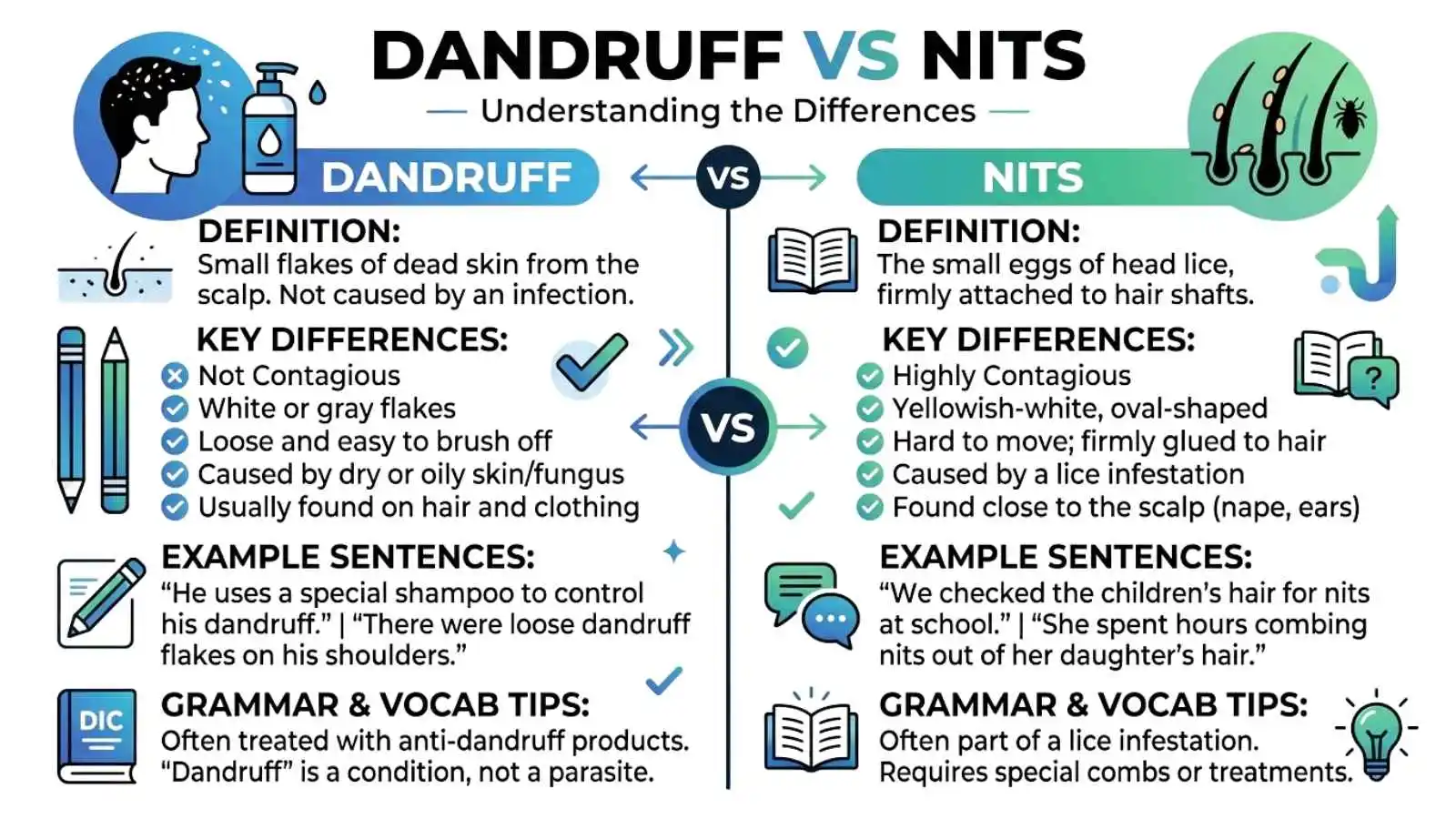
Dandruff vs Nits: Key Differences
This isn’t a spelling mix-up. These are two totally different things happening on or near your scalp.
| Feature | Dandruff | Nits |
| What it is | Flaky, dead skin | Lice eggs |
| Where it sits | Loose on the scalp and hair | Glued tightly to the hair shaft |
| How it moves | Falls off easily when brushed | Stays stuck, even with brushing |
| Cause | Dry or oily skin, weather, stress | Head lice |
| Spreads to others | No | Yes, through close contact |
| Color | White, yellow, or gray | White, tan, or yellowish, close to the scalp |
How Can You Tell Them Apart?
Try to brush it off. Dandruff flakes fall away easily with a light brush or shake of the head. Nits stay firmly attached, since lice glue them onto each strand of hair.
Check where it sits. Dandruff spreads loosely across the scalp and hair. Nits usually stick close to the scalp, near the roots, since that’s the warmest spot for eggs to grow.
Look at the shape. Dandruff flakes look irregular and flat, almost like small bits of paper. Nits look more oval or teardrop-shaped, and they cling tightly to a single strand.
Watch for movement nearby. If you notice tiny bugs moving through the hair, not just white specks, that points toward lice, not dandruff, since dandruff never moves on its own.
Should You Worry About Either One?
Neither dandruff nor nits usually causes serious harm, but each needs a different kind of care.
Dandruff is common and often manageable with regular washing and the right shampoo. See a doctor if it becomes severe, painful, or doesn’t improve with basic care, since this could point to another skin condition needing treatment.
Nits and lice need active treatment, since lice can spread quickly to others through close contact. A pharmacist, doctor, or school nurse can guide you toward safe, effective treatment options.
Please remember, this article gives general information only. A professional check gives you a clear answer, especially if you’re not fully sure what you’re looking at.
Common Mistakes People Make
Mistakes
1: Assuming all white flakes mean lice. Plenty of white flakes are simply dandruff, especially if they fall off easily and aren’t stuck to the hair strand.
2: Ignoring nits because they look small and harmless. Nits hatch into lice fairly quickly, so early treatment matters, especially in schools or homes with young kids.
3: Trying to scratch nits out instead of using proper treatment. Scratching alone rarely removes nits, since they’re glued on tightly. A fine-tooth comb and proper treatment work far better.
4: Thinking dandruff means poor hygiene. Dandruff isn’t caused by being unclean. It’s often tied to skin type, weather, or a scalp condition, not a lack of washing.
Dandruff and Nits in Everyday Life
In a parent’s text message: “Checked her hair after the school note, thankfully it’s just dandruff, not lice.”
On a shampoo bottle: “Specially formulated to help control flaking and itching caused by dandruff.”
In a school health notice: “Please check your child’s hair for nits following a reported case in the classroom.”
On social media: “Anyone have tips for dealing with a super itchy, flaky scalp? Pretty sure it’s just dandruff “
In a health blog: “Nits are often mistaken for dandruff, but a simple comb-through can help you tell them apart.”
Search Trends: What Are People Asking?
Search interest for both terms rises and falls throughout the year, often tied to school schedules. “Nits” tends to spike right after school breaks or after a lice outbreak gets reported in a classroom, since parents rush to check their kids’ hair. “Dandruff” stays fairly steady year-round, though searches often increase during colder, drier months, when scalp dryness tends to get worse.
Interest in “dandruff vs nits” or “dandruff or lice” spikes whenever someone spots something unfamiliar in their own or their child’s hair and wants a fast way to tell the two apart before heading to a pharmacy or doctor.
| Keyword Variation | Common Reason for Search | Typical Season |
| Dandruff | Scalp itching, flaking | Fall and winter |
| Nits | Lice concerns, school notices | Anytime, spikes after outbreaks |
| Dandruff vs lice | Trying to tell them apart | Anytime |
| Nit comb | Lice treatment | After a lice case is found |
Frequently Asked Questions
1. Can dandruff turn into lice? No. Dandruff and lice come from completely different causes. Dandruff cannot turn into lice or nits.
2. Are nits contagious? Head lice, and the nits they lay, spread through close head-to-head contact or shared personal items, so yes, they can pass from person to person.
3. Is dandruff contagious? No. Dandruff comes from your own skin and doesn’t spread to other people.
4. How do I know for sure if it’s dandruff or nits? Try brushing it out. Dandruff falls away easily, while nits stay firmly stuck to the hair strand, even with brushing.
5. Can adults get nits, or is it just a kid thing? Adults can get head lice and nits too. It’s more commonly reported in kids due to close contact at school, but anyone can get it.
6. Should I see a doctor for dandruff? Mild dandruff often responds well to regular washing and the right shampoo. See a doctor if it’s severe, painful, or doesn’t improve over time.
7. What’s the fastest way to check for nits at home? Use a fine-tooth comb on damp hair, section by section, checking close to the scalp for anything that doesn’t slide off easily.
Wrapping Up:
Dandruff and nits might both show up as small, light-colored specks in your hair, but they come from completely different sources. Dandruff comes from your own skin, shedding a bit faster than usual. Nits come from head lice, tiny bugs that glue their eggs tightly onto individual hair strands.
The easiest way to tell them apart comes down to one simple test: try brushing it out. Dandruff falls away easily. Nits stay stuck, no matter how much you brush. If you’re ever unsure, a pharmacist, doctor, or school nurse can take a closer look and give you a clear answer.
Neither one is anything to feel embarrassed about. Both are common, both are treatable, and knowing the difference just helps you take the right next step.

Ethan Carter is a language writer at Wordellect who helps readers understand word differences, grammar rules, and spelling variations through simple and accurate guides.